
Vacuum Pump Maintenance (2026)
Nov 3rd 2025
HVAC Vacuum Pump Maintenance: Extend Your Tool's Life
A reliable HVAC HVAC vacuum pump is non-negotiable for proper AC installation, evacuation, and repair. Regular maintenance isn’t just about tool longevity—it directly affects micron levels, system cleanliness, and customer satisfaction. In demanding climates like Miami and South Florida, where systems work hard year-round, a well-maintained pump can be the difference between a tight, dry system and repeat callbacks.
Use this guide to build a quick service routine for your pumps and pair it with professional-grade tools from: HVAC Vacuum Pumps, HVAC Diagnostic Analyzers & Micron Gauges, and Refrigerant Hoses & Fittings.
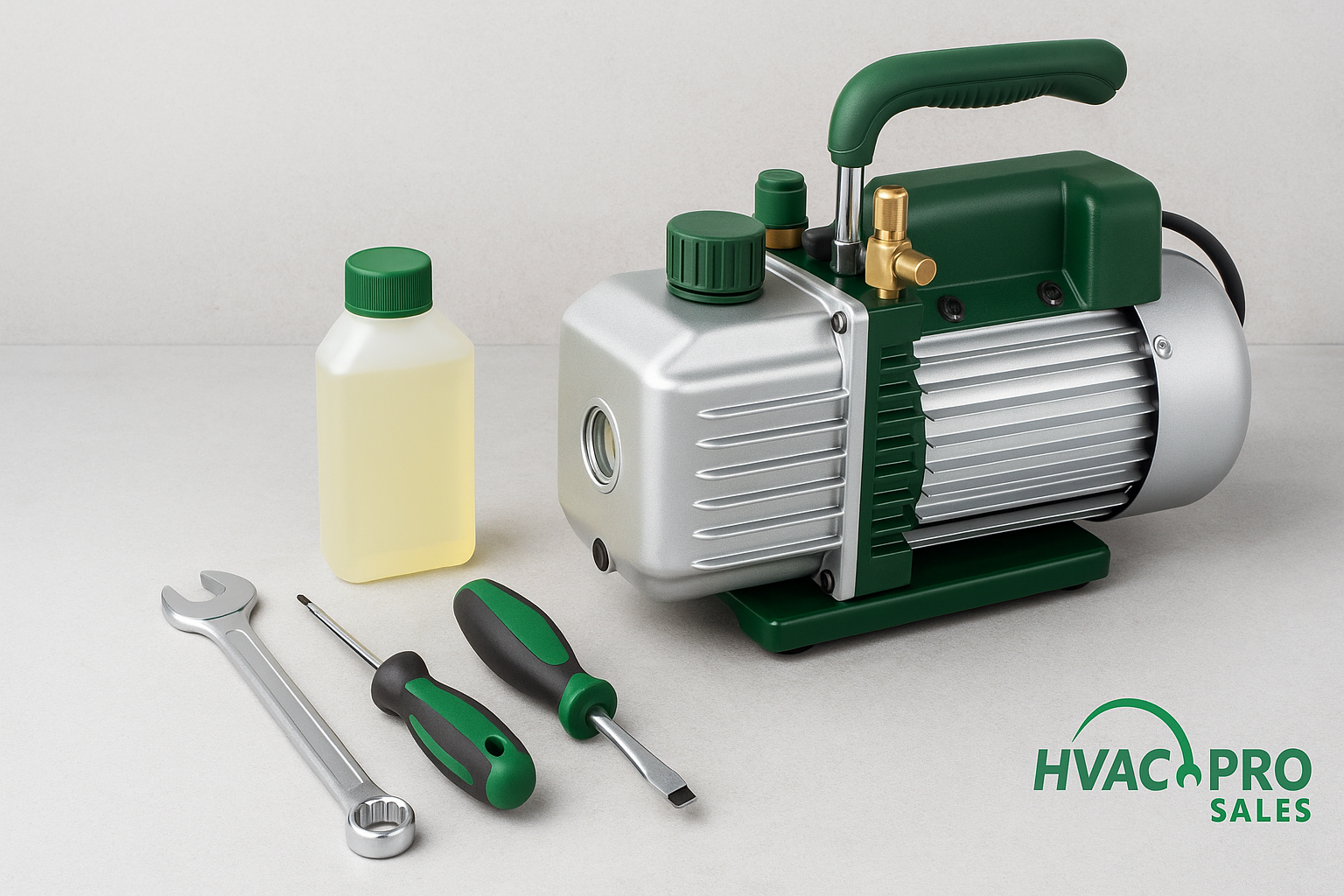
Weekly Vacuum Pump Maintenance Checklist
Even if you don’t use the pump every day, a quick weekly check keeps it ready for the next install or compressor change-out. Many techs tie this into shop day or truck restocking.
- Oil Inspection: Check the sight glass for discoloration, cloudiness, or visible debris. Dark or milky oil usually means moisture and contaminants have been pulled from the system. If oil is cloudy, change it before the next deep vacuum. Keep quality oil on hand in your HVAC tools & instruments restock list.
- Gas Ballast Operation: Verify that the gas ballast opens and closes smoothly and operates as designed. Using the gas ballast properly during wet systems helps remove moisture from the oil and maintain deeper vacuum levels.
- Connection Check: Inspect hoses, fittings, and valve cores for cracks, flattening, or oil residue that might indicate leaks. Consider upgrading to dedicated vacuum-rated hoses and core tools to minimize restrictions and leak points.
- Performance Test: Connect to a known good test rig or vacuum tree with a digital micron gauge and verify the pump can reach and hold deep vacuum in a reasonable time. Log micron levels and time-to-deep-vacuum so you can spot performance drift over months of use.
Step-by-Step Oil Change Procedure
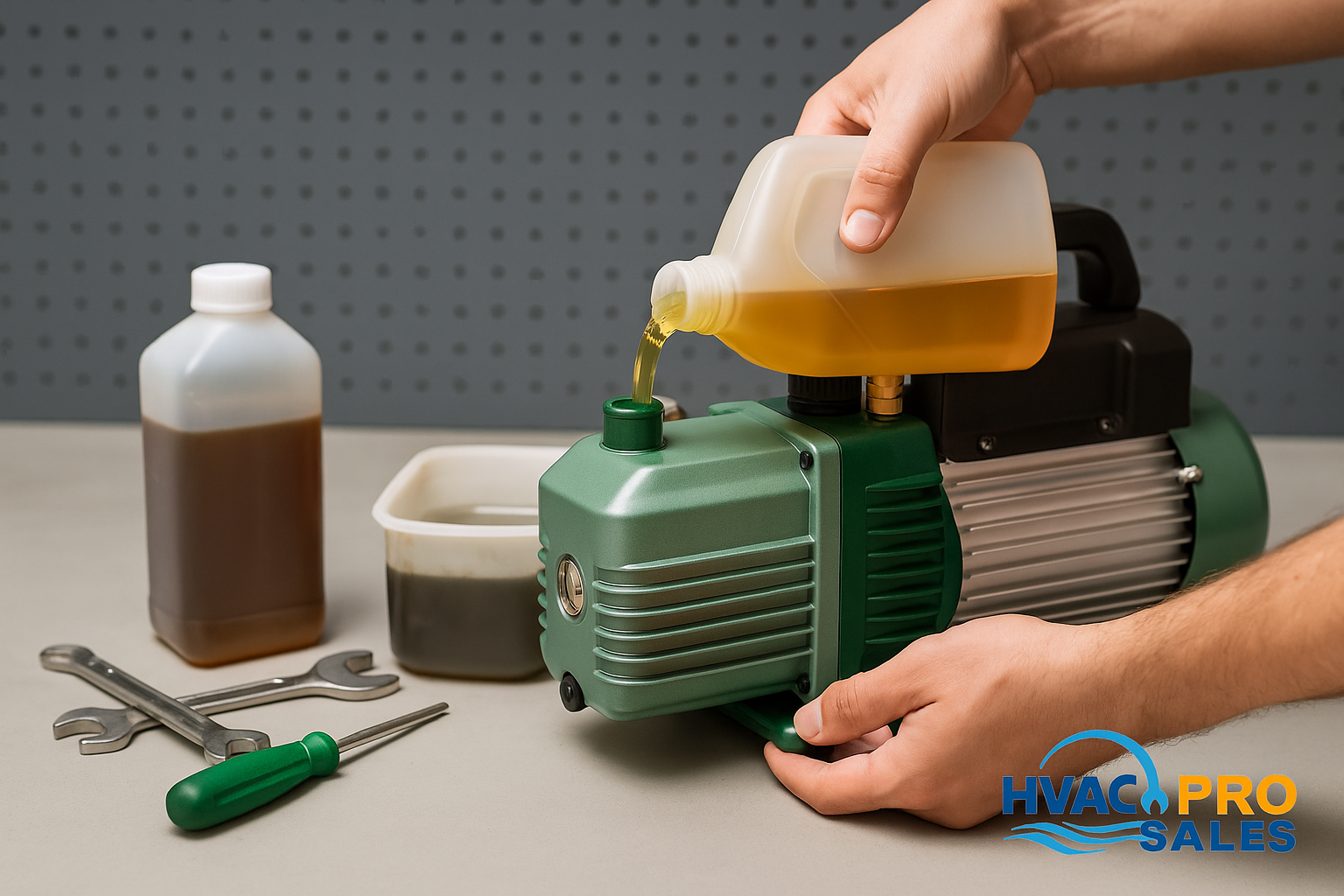
Clean oil is the heart of vacuum pump performance. Dirty or moisture-laden oil will stall at higher micron levels and lengthen pump-down times—no matter how good the gauge or hoses are. Follow your manufacturer’s service manual, and use this as a general field guide:
1. Run pump for 10 minutes to warm the oil
Warm oil drains faster and carries more contamination out of the pump. Do this with the pump isolated from any live system, and follow all jobsite safety guidelines.
2. Turn off and disconnect from power
Shut the pump down and unplug it or lock out the power source. Never open the drain while the pump is running.
3. Drain oil into a proper container
Open the drain plug and allow oil to fully drain into an approved waste container. Follow local regulations for disposal—used oil should never be dumped on site.
4. Flush with vacuum pump cleaner if needed
For heavily contaminated systems or milky oil, some manufacturers recommend a flushing fluid. Follow their instructions and use only cleaners rated for your pump.
5. Refill with fresh, high-quality vacuum pump oil
Refill to the specified level with manufacturer-approved vacuum oil. Never substitute motor oil or generic lubricants. Stock the correct oil in your shop with your pump inventory.
6. Record date and hours on a maintenance log
Whether you track by hours, job count, or calendar, logging oil changes helps you spot patterns. Frequent oil contamination may point to consistently wet systems or process issues.
Common Vacuum Pump Problems & Solutions
A vacuum pump that “runs but doesn’t pull down” is a common complaint. Before blaming the pump, separate true pump issues from system-side problems.
Poor Ultimate Vacuum:
Often caused by contaminated oil, worn vanes, leaking shaft seals, or a faulty exhaust valve. Start by changing oil and verifying performance with a micron gauge. If levels are still high, the pump may need service or rebuild.
Long Pump-Down Times:
If the pump tests fine on a blank-off test but takes forever on a system, suspect leaks, oversized systems with small hoses, or restricted manifolds. Use dedicated large-bore vacuum hoses and core removal tools and verify all service valves are fully open.
Oil Carryover:
Excess oil mist at the exhaust often means the exhaust filter is saturated or failing. Replace the exhaust/mist filter per manufacturer recommendations, and ensure the oil level is not overfilled.
In all cases, pairing your pump with the right support tools—like digital manifolds and micron gauges—makes it much easier to prove performance and document your work for customers.
Frequently Asked Questions
Q: How often should I change vacuum pump oil?
A: Best practice is to change oil after every major evacuation (system change-out, line-set replacement, compressor swap), or at minimum every 3–5 uses. Change it immediately if the oil appears milky or cloudy—that’s a sign of moisture. Logging changes on a maintenance sheet for each pump helps keep your whole team consistent.
Q: Can I use regular motor oil in my vacuum pump?
A: No. Never use motor oil or generic shop oil in a vacuum pump. Vacuum pump oil is specifically formulated for low vapor pressure and proper lubrication under deep vacuum conditions. Using the wrong oil can damage the pump and prevent it from reaching the microns required by modern HVAC systems.
Q: How can I tell if the problem is my pump or the system?
A: Perform a quick blank-off test: connect the pump directly to a micron gauge with a short, known-good hose, and isolate the system. If the pump pulls down quickly and holds deep vacuum, the issue is likely on the system side (leaks, moisture, restrictions). If it won’t pull down under test, focus on the pump: oil, filters, seals, or internal wear.
Ready to Upgrade or Maintain Your HVAC Vacuum Pump?
Keep your evacuations fast, clean, and verifiable with professional-grade pumps, micron gauges, and vacuum-rated hoses—ready for every job from Miami–Dade to any market in the U.S.