

How to Install a Hard Start Kit on an HVAC Compressor: Pro Guide
Published by HVACProSales Team on Mar 26th 2026
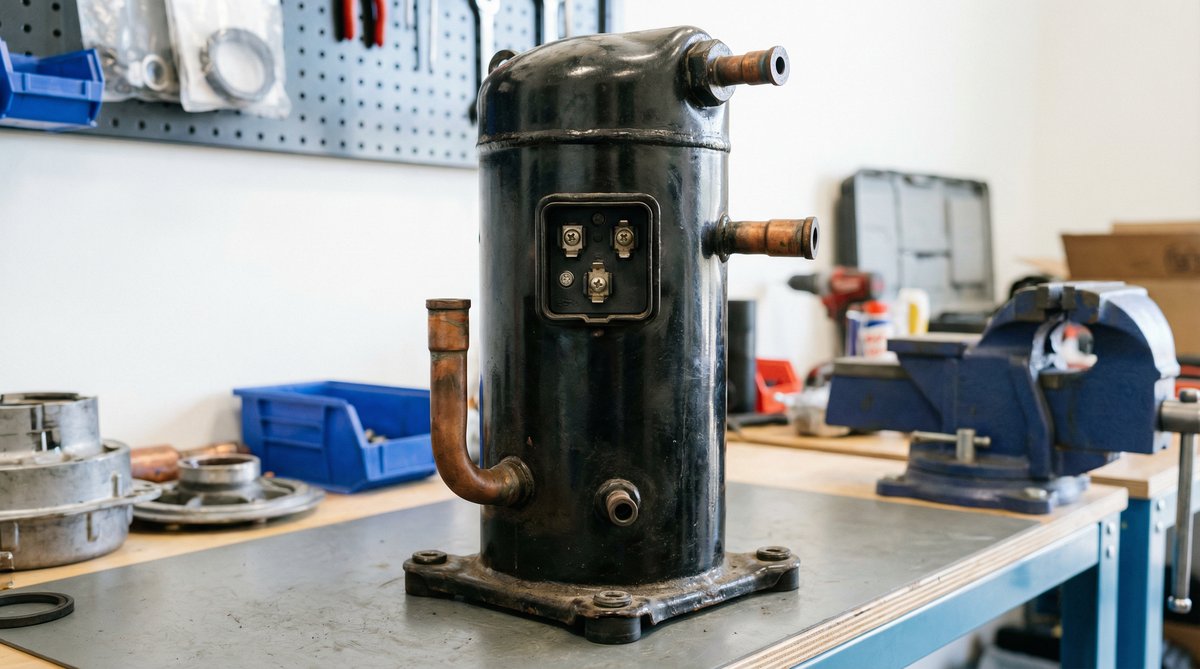
How to Install a Hard Start Kit on an HVAC Compressor: A Professional Guide
The compressor is the heart of your air conditioning system, and its startup phase is the most taxing part of its operation. When a compressor struggles to kick on, it draws excessive current, generates intense heat, and can eventually lead to premature system failure. For HVAC professionals and savvy homeowners alike, installing a hard start kit is one of the most effective ways to alleviate this stress, improve efficiency, and extend the lifespan of the unit.
This guide provides a comprehensive walkthrough on the installation of hard start kits, the science behind their operation, and how to determine if your system is a candidate for this upgrade.
Understanding the Hard Start Kit
A hard start kit is a specialized electrical component designed to provide an extra "boost" of torque to an HVAC compressor during its initial startup. In technical terms, it consists of a start capacitor and a potential relay (or a thermistor in simpler models). While the standard run capacitor handles the continuous operation of the motor, the hard start kit is only active for a fraction of a second—just long enough to overcome the inertia of the compressor's internal components and the pressure of the refrigerant.
How It Works: The Physics of Startup
When an AC unit cycles on, the compressor must move from a dead stop to full speed almost instantaneously. This requires a massive surge of electricity, known as Locked Rotor Amps (LRA). If the compressor is old, has tight bearings, or is working against high head pressure, it may stay in this high-current state for too long, causing the windings to overheat.
"A hard start kit adds the starting torque and some means of removing the capacitor from the start circuit as soon as the compressor has started." [1]
By adding a start capacitor in parallel with the run capacitor, the kit increases the phase shift between the motor's windings, creating a stronger magnetic field and more rotational force. Once the motor reaches approximately 75% of its rated speed, the potential relay detects the "back EMF" (electromotive force) and disconnects the start capacitor to prevent damage to the motor windings.
Key Benefits of Installation
| Benefit | Description |
|---|---|
| Reduced Inrush Current | Shortens the duration of the high-amperage surge, protecting your electrical panel and wiring. |
| Prevents Voltage Drops | Stops lights from flickering in the home when the AC kicks on by stabilizing the initial power draw. |
| Compressor Longevity | Reduces the heat generated during startup, which is the primary cause of compressor insulation breakdown. |
| Improved Reliability | Helps older compressors start even under difficult conditions, such as high outdoor temperatures. |
When Should You Install a Hard Start Kit?
Not every system requires a hard start kit, but there are specific scenarios where they are highly recommended. If you notice any of the following symptoms, your compressor is likely "hard starting":
- Flickering Lights: If the lights in your home dim or flicker for a split second when the AC starts, the unit is drawing too much current.
- Audible Stuttering: A loud "thud" or a buzzing sound that lasts more than a second before the compressor runs smoothly.
- Frequent Tripping: If the outdoor unit's circuit breaker trips occasionally during startup, it's a sign of excessive LRA.
- Older Equipment: As compressors age, their mechanical resistance increases. A hard start kit can breathe new life into a 10-year-old unit.
- Reciprocating Compressors: Unlike modern scroll compressors, older reciprocating models often require more torque to start against pressure.
Note: Hard start kits are generally not compatible with variable-speed or inverter-driven compressors, as these systems manage their own startup curves electronically. [1]
Step-by-Step Installation Guide
Before beginning, ensure you have the correct kit for your unit's tonnage. Common kits like the Supco SPP6 are popular for their simplicity, while 3-wire potential relay kits offer more precision for larger commercial or high-end residential units.
Tools and Materials Needed
- Multimeter (with capacitance testing)
- Insulated screwdrivers
- Needle-nose pliers
- 1/4" and 5/16" nut drivers
- Hard start kit (matched to system tonnage)
- Zip ties or mounting bracket
Phase 1: Safety and Preparation
Step 1: Disconnect Power
Safety is paramount. Turn off the power at the outdoor disconnect box near the condenser. For added safety, turn off the dedicated AC breaker in the main electrical panel. Use your multimeter to verify that no voltage is present at the contactor terminals.
Step 2: Access the Control Panel
Remove the service panel on the side of the condenser unit using your nut driver. This will expose the contactor, the dual run capacitor, and the compressor wiring.
Step 3: Discharge the Capacitor
Even with the power off, capacitors can hold a lethal electrical charge. Use a 20k-ohm 5-watt resistor or an insulated screwdriver to short the terminals (HERM to C, and FAN to C) to safely discharge the stored energy.
Phase 2: Wiring the Kit
The wiring process depends on whether you are using a 2-wire or a 3-wire kit.
Option A: Installing a 2-Wire Kit (e.g., Supco SPP6)
These kits are wired in parallel with the existing run capacitor.
- Identify the Terminals: Locate the dual run capacitor. It will have three sets of terminals labeled C (Common), HERM (Hermetic/Compressor), and FAN.
- Connect Wire 1: Attach one wire from the hard start kit to the HERM terminal.
- Connect Wire 2: Attach the second wire from the hard start kit to the C (Common) terminal.
- Orientation: It does not matter which wire goes to which terminal on a standard 2-wire kit; they are non-polarized.
Option B: Installing a 3-Wire Potential Relay Kit
These kits provide a more "surgical" start by using a relay to drop the capacitor out of the circuit.
- Mount the Relay: Secure the potential relay in an upright position. The internal weights are gravity-sensitive and may not function correctly if mounted sideways.
- Follow the Diagram: Typically, terminal 5 goes to the Common side of the line, terminal 2 goes to the HERM terminal on the capacitor, and terminal 1 connects to the start capacitor provided in the kit.

Alt text: A clear wiring diagram showing the connection between a 3-wire hard start kit, the run capacitor, and the HVAC contactor.
Phase 3: Securing and Testing
Step 4: Secure the Components
Use zip ties or the included mounting bracket to secure the hard start kit inside the control box. Ensure that the wires are tucked away from the hot discharge line or the spinning fan blades.
Step 5: Reassemble and Power Up
Replace the service panel and restore power at the disconnect and the main breaker.
Step 6: Verify Operation
Listen to the compressor as it starts. It should kick on instantly with a crisp, clean sound. If you have a clamp-on ammeter, you can measure the inrush current to confirm the reduction in startup amperage.

Alt text: An HVAC technician using a clamp meter to measure the startup amperage of an AC compressor after installing a hard start kit.
Professional Pro-Tips and Troubleshooting
- Sizing Matters: Never "oversize" a hard start kit. Using a kit meant for a 5-ton unit on a 1.5-ton unit can provide too much torque, potentially damaging the compressor's internal valves or "slugging" the motor.
- Check the Run Capacitor First: If your compressor is struggling to start, always test the existing run capacitor with a multimeter. A weak run capacitor (e.g., a 45µF reading at 30µF) is often the root cause of the problem.
- Avoid "Cheap" 2-Wire Kits on High-End Units: While 2-wire kits are easy to install, they use a PTC thermistor that requires a "cool down" period between starts. If the AC short-cycles, the kit may not provide a boost on the second attempt. For high-cycle environments, always use a 3-wire potential relay kit.
Frequently Asked Questions (FAQs)
1. Does a hard start kit save money on electricity?
While a hard start kit reduces the massive energy spike during the first second of operation, the total energy savings on your monthly bill are negligible. The primary value is in equipment protection and preventing expensive compressor replacements.
2. Can I install a hard start kit on a brand-new AC?
Yes. Many professional installers add a hard start kit to new installations as a preventative measure, especially if the home is prone to voltage fluctuations or if the unit uses a reciprocating compressor.
3. What is the difference between a hard start and a soft start?
A hard start kit uses a capacitor to provide maximum torque for a fast start. A soft start kit uses electronics to gradually ramp up the current over several seconds. Soft starts are better for running ACs on generators, while hard starts are better for mechanical "sticky" compressors.
4. How long do hard start kits last?
A high-quality potential relay kit can last 10 years or more. Cheaper 2-wire kits that use thermistors may fail after 3-5 years as the internal components degrade from heat.
Need Professional HVAC Components?
Don't let a struggling compressor lead to a total system breakdown. Shop our selection of professional-grade hard start kits, capacitors, and contactors to keep your system running at peak performance.
- Shop Hard Start Kits: Browse our HVAC Capacitor Category
- Expert Support: Have questions about sizing? Contact our technical team.
- Email: support@hvacprosales.com
- Phone: 1-866-330-1709
References
[1] Hard Start Kits: What are they, and why would you need one for your HVAC?
[2] When should I add a hard start to my central air conditioner?
[3] Hard and Soft Starters in the HVAC Industry