

How to Replace a Heat Pump Contactor: Step-by-Step Pro Guide
Published by HVACProSales Team on Mar 26th 2026
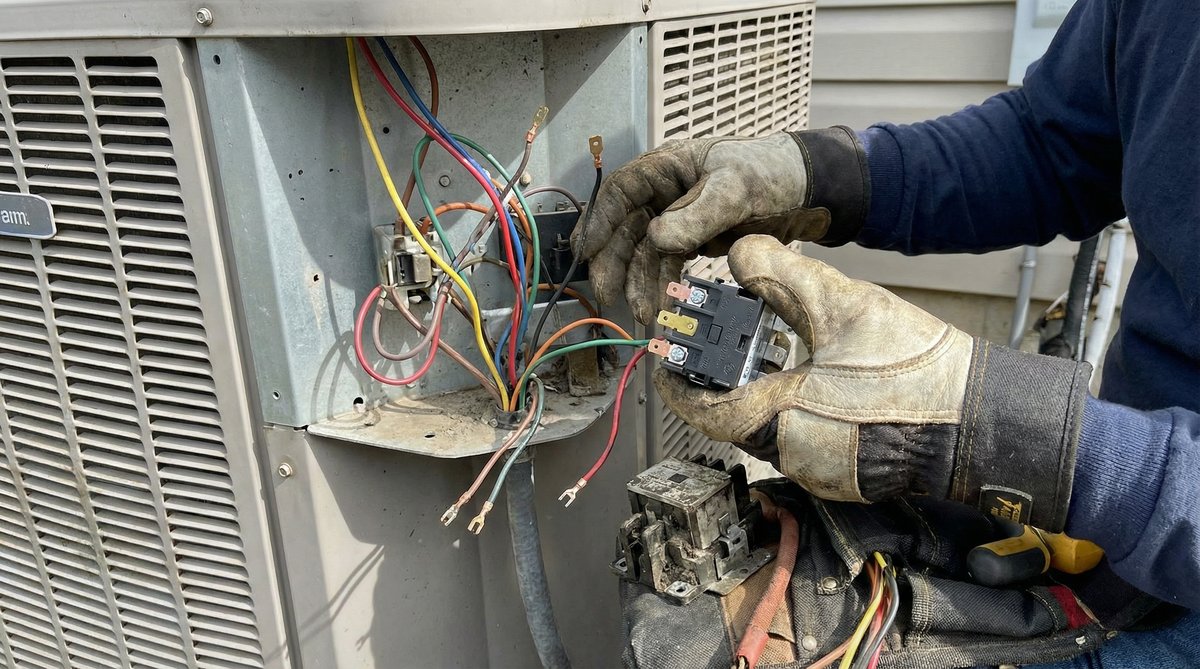
How to Replace a Heat Pump Contactor: Pro Guide
A failing heat pump HVAC contactor replacement is one of the most common reasons a high-performance HVAC system suddenly grinds to a halt. While it might seem like a minor component, this heavy-duty electrical switch is the "gatekeeper" that allows high-voltage power to reach your compressor and fan motor. When it fails, your home’s comfort is compromised, and if left unaddressed, it can lead to catastrophic damage to more expensive components.
In this comprehensive guide, we’ll walk you through everything you need to know about how to replace a heat pump contactor, from diagnosing the problem to the final safety check. Whether you are a seasoned DIYer or a junior technician, these pro-level insights will ensure a safe and efficient repair.
What is a Heat Pump Contactor?
A heat pump contactor is an electromechanical switch that uses a low-voltage signal (usually 24V from your thermostat) to close a set of high-voltage contacts. This completes the circuit for the compressor and the outdoor fan motor.
Think of it as the "bridge" between your thermostat’s logic and the brute force of your electrical panel. Because it engages and disengages thousands of times over its lifespan, the internal contacts eventually "pit" or "weld" due to electrical arcing, leading to system failure.
Real-World Use Case: The "Clicking" Outdoor Unit
Imagine it's a humid July afternoon. Your thermostat says "Cool On," and you hear a distinct click from the outdoor unit every few minutes, but the fan and compressor never kick in. This is a classic symptom of a contactor coil that is energizing but failing to pass high-voltage power because of burnt contact points.
Problem -> Cause -> Solution: Troubleshooting Your Contactor
Before you start pulling wires, it’s critical to confirm the contactor is actually the culprit.
| Problem | Potential Cause | Solution |
|---|---|---|
| Loud Buzzing or Humming | Chattering contacts or a weak coil. | Inspect for debris/ants; replace contactor if buzzing persists. |
| Unit Won't Turn Off | Contacts have "welded" shut due to arcing. | Emergency: Kill power at the breaker immediately; replace contactor. |
| Unit Won't Start (No Click) | Failed 24V coil or thermostat issue. | Test coil with a multimeter for 24V; if present and no movement, replace. |
| Intermittent Operation | Pitted contacts causing high resistance. | Visually inspect contacts for blackening or "pitting." |
Pro Tip: Ants and small insects are often attracted to the electromagnetic field of a contactor. They can get crushed between the contacts, preventing a solid electrical connection. Always check for "ant infestations" before assuming the part is dead.
Tools and Materials Needed
To perform a professional-grade replacement, you will need the following:
* HVAC multimeter (Essential for verifying power is off)
* Insulated Screwdrivers (Phillips and Flathead)
* Nut Drivers (usually 1/4" and 5/16")
* Needle-Nose Pliers
* Replacement Contactor (Must match poles, amps, and coil voltage)
* Wire Labels or a Smartphone Camera
Step-by-Step Instructions: Replacing Your Heat Pump Contactor
Step 1: Safety First - Disconnect All Power
Never work on an HVAC system while it is energized.
1. Turn off the thermostat.
2. Go to the outdoor disconnect box (usually mounted on the wall near the unit) and pull the disconnect plug or flip the switch to "OFF."
3. Turn off the corresponding breaker in your main electrical panel.
4. Verification: Use your HVAC multimeter to test the "Line" side of the contactor. It should read 0V.
Step 2: Access the Control Panel
Remove the service panel on the corner of your outdoor unit. You will see the contactor, the capacitor, and the defrost board.
Step 3: Document the Wiring
Before removing any wires, take a high-resolution photo. Heat pump contactors have "Line" (power in), "Load" (power out to compressor/fan), and "Coil" (low voltage) connections. Getting these mixed up can cause a short circuit.
Step 4: Remove the Old Contactor
- Using your nut driver or screwdriver, loosen the lugs on the high-voltage wires and pull them away.
- Disconnect the small low-voltage wires from the sides of the coil.
- Unscrew the mounting screws holding the contactor to the base plate and remove the old part.
Step 5: Install the New Contactor
- Mount the new contactor in the same orientation as the old one.
- Match the Specs: Ensure your new part matches the Full Load Amps (FLA) and Coil Voltage (usually 24V for residential units) of the original.
- Reconnect the high-voltage "Line" and "Load" wires. Ensure they are tight; loose connections cause heat and premature failure.
- Reconnect the low-voltage coil wires.
Step 6: Final Inspection and Power Up
Check that no wires are touching the cabinet or other components. Replace the service panel. Restore power at the main breaker and the outdoor disconnect. Set your thermostat to "Cool" or "Heat" and listen for the contactor to engage.
Pro Insights: Why Contactors Fail Prematurely
- Low Voltage Issues: If your transformer is weak, the contactor might "chatter" (rapidly open and close), which burns the contacts in seconds.
- Oversized Units: A system that short-cycles (turns on and off too frequently) will wear out a contactor much faster than a properly sized system.
- Heat Stress: High ambient temperatures increase electrical resistance, making the contactor run hotter.
Internal Linking & Resources
If you’re performing this repair, you might also need to check these related components:
* Shop HVAC Capacitors – It’s common practice to replace the capacitor at the same time as the contactor.
* Browse Heat Pump Replacement Parts
* View All HVAC Contactors
FAQ: Frequently Asked Questions
1. Can I use a 2-pole contactor to replace a 1-pole contactor?
Yes, in most cases you can. A 2-pole contactor breaks both "legs" of the 240V power, whereas a 1-pole contactor only breaks one. However, you must ensure the amperage rating is equal to or higher than the original.
2. How much does it cost to replace a contactor?
The part itself typically costs between $20 and $60. If you hire a professional, the total cost usually ranges from $200 to $450, including labor and diagnostic fees.
3. What happens if I install the wrong coil voltage?
If you install a 120V or 240V coil on a 24V system, the contactor will never pull in. If you put a 24V coil on a high-voltage circuit, the coil will burn out instantly and potentially damage your transformer.
Contact HVAC Pro Sales Support
Need help finding the exact match for your unit? Our team of experts is standing by.
* Email: support@hvacprosales.com
* Phone: 1-866-330-1709
* Hours: Mon-Fri, 8 AM - 6 PM EST