

HVAC Contactor Problems: Symptoms, Causes & Replacement Guide
Published by HVACProSales Team on Mar 26th 2026
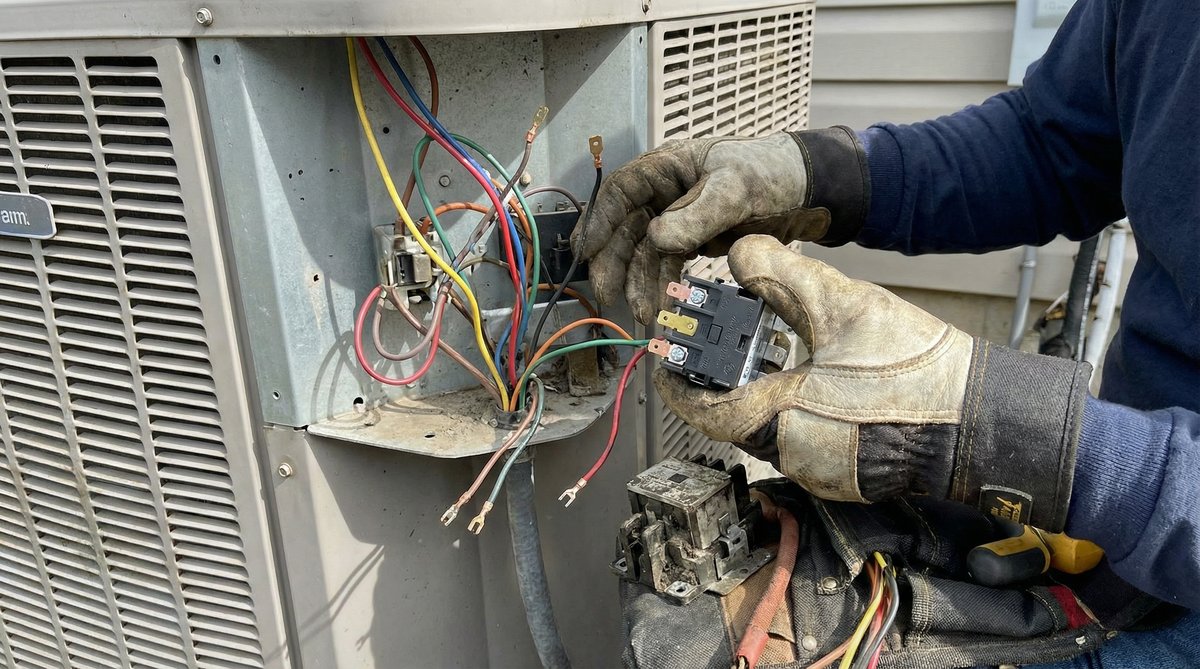
HVAC Contactor Problems: Symptoms and Replacement Guide
The HVAC contactor replacement is a small but critical component within your air conditioning system's outdoor condensing unit. Acting as a heavy-duty electrical relay, it controls the flow of high-voltage electricity to the compressor and the fan motor. When your thermostat calls for cooling, it sends a low-voltage signal (typically 24V) to the contactor's coil, creating a magnetic field that pulls the contacts closed and starts the cooling cycle. However, due to constant mechanical movement and high electrical loads, contactors are among the most common points of failure in HVAC systems.
Understanding the early warning signs of HVAC contactor problems can save homeowners and technicians from more expensive repairs, such as a burnt-out compressor or a damaged control board. This guide provides a deep dive into diagnosing symptoms, identifying causes, and a professional step-by-step replacement procedure.
Common Symptoms of a Faulty HVAC Contactor
Recognizing a failing contactor often starts with paying attention to the sounds and performance of your outdoor unit. Because the contactor is an electromechanical device, its failure modes can be both electrical and mechanical.
1. The "Chattering" or Buzzing Noise
One of the most distinct signs of a struggling contactor is a loud chattering, clicking, or humming sound coming from the outdoor unit. This "chattering" occurs when the magnetic coil lacks the strength to hold the contacts firmly in place, causing them to rapidly open and close [1]. This can be caused by low voltage from the thermostat or debris trapped between the contact points.
2. AC Unit Fails to Start
If you hear your indoor blower motor running but the outdoor compressor and fan remain silent, the contactor may be failing to "pull in." This often indicates a burnt-out coil or an open circuit within the component. Without the contactor closing, the high-voltage power required by the compressor never reaches its destination.
3. The System Won't Turn Off
Conversely, a contactor can become "welded" shut. This happens when the electrical arcing between the contacts creates enough heat to melt the metal surfaces together [2]. In this scenario, the outdoor unit will continue to run even after the thermostat has reached its target temperature, which can lead to a frozen evaporator coil or compressor failure.
4. Visible Pitting or Burn Marks
A physical inspection often reveals the truth. Over time, the silver or copper coating on the contacts wears away, leading to "pitting"—small craters on the surface of the metal. If you see black carbon deposits (soot) or melted plastic around the terminals, the contactor has reached the end of its service life and poses a fire risk [3].
Root Causes of Contactor Failure
Why do these components fail? While normal wear and tear is the primary driver, several external factors can accelerate the process.
| Cause | Description | Impact |
|---|---|---|
| Electrical Arcing | Small sparks occur every time the contacts close. | Leads to pitting and eventual welding of contacts. |
| Insects & Debris | Ants and spiders are often attracted to the electromagnetic field. | Pests get crushed between contacts, preventing a solid connection. |
| Overheating | Loose wire connections create high resistance. | Melts the plastic housing and damages the internal coil. |
| Low Voltage | Issues with the transformer or thermostat wiring. | Causes the contactor to "chatter," leading to rapid wear. |
"In many regions, 'crazy ants' or fire ants are a leading cause of contactor failure. They crawl into the contactor housing and get stuck between the points, effectively insulating the circuit and preventing the AC from starting." [4]
Professional Troubleshooting: How to Test a Contactor
Before replacing the part, a professional technician will use a HVAC multimeter to confirm the diagnosis. Warning: HVAC systems contain lethal voltages. Only qualified individuals should perform live electrical testing.
- Check for 24V at the Coil: With the thermostat calling for cool, measure the voltage across the two side terminals (the coil). If you have 24V but the contactor hasn't pulled in, the coil is likely bad.
- Measure Resistance (Ohms): With power disconnected and wires removed, check the resistance of the coil. A reading of "OL" (Open Line) confirms a burnt-out coil [2].
- Voltage Drop Test: While the unit is running, a technician might measure the voltage drop across the contacts. A significant drop indicates high resistance due to pitting, meaning the part needs replacement.
Step-by-Step HVAC Contactor Replacement Guide
If you have determined the contactor is faulty, follow these steps for a safe and professional replacement.
Tools Required:
- Nut driver set (usually 1/4" or 5/16")
- Needle-nose pliers
- Multimeter
- Replacement contactor (must match the original's Pole count and Amp rating)
Step 1: Disconnect All Power
Safety is paramount. Turn off the power at the outdoor disconnect box (pull the "pullout" or flip the breaker). Additionally, turn off the furnace or air handler breaker inside the house to cut the 24V control power. Verify the absence of voltage with your HVAC multimeter before touching any wires.
Step 2: Document the Wiring
Take a clear photograph of the existing wiring. HVAC contactors have "Line" (power in), "Load" (power out to compressor/fan), and "Coil" (low voltage) connections. Ensuring every wire goes back to its correct terminal is vital.
Step 3: Remove the Old Contactor
Unscrew the mounting screws holding the contactor to the control panel. Use your pliers to gently pull the wire connectors off the terminals. If the wires are brittle or burnt, they may need to be trimmed and re-terminated with new spade connectors.

Step 4: Install the New Component
Mount the new contactor in the same position. Refer to your photo and reconnect the wires one by one. Ensure all connections are tight; a loose connection is the number one cause of premature failure in new components.
Step 5: Restore Power and Test
Replace the service panel cover, restore power at both the indoor and outdoor breakers, and set the thermostat to "Cool." The contactor should pull in with a single, solid "click," and the system should start immediately.
Pro Insights: Choosing the Right Contactor
When buying a replacement, you cannot simply pick any part off the shelf. You must match three specific criteria:
1. Poles: Most residential units use a 1-pole or 2-pole contactor. A 1-pole contactor only breaks one side of the 240V circuit, while a 2-pole breaks both.
2. Full Load Amps (FLA): The replacement must have an amp rating equal to or higher than the original (typically 30A or 40A for residential units).
3. Coil Voltage: Ensure the coil is rated for 24V, which is standard for residential HVAC systems.
Shop Mini Splits | Browse All HVAC Parts
Frequently Asked Questions (FAQ)
How long does an HVAC contactor typically last?
On average, an HVAC contactor lasts between 5 to 10 years. However, its lifespan depends heavily on the "cycle rate" (how often your AC turns on and off) and environmental factors like dust and humidity.
Can I clean a pitted contactor instead of replacing it?
While you can technically sand down pitted contacts as a temporary fix, it is not recommended. Removing the protective coating exposes the base metal, which will oxidize and fail again very quickly. Replacement is the only reliable long-term solution.
Why is my new contactor buzzing?
A buzzing sound in a new contactor usually indicates a "low voltage" issue. If the transformer isn't providing a steady 24V, the magnetic field will be weak, causing the contacts to vibrate. Check for loose low-voltage wires or a failing transformer.
Is a 1-pole contactor interchangeable with a 2-pole?
You can often replace a 1-pole contactor with a 2-pole contactor (wiring both sides), but you should never replace a 2-pole with a 1-pole, as it leaves one leg of the power "hot" at all times, creating a safety hazard.
Need Professional Assistance?
If you're uncomfortable working with high-voltage electricity or need help identifying the correct part for your system, our team is here to help.
Contact HVAC Pro Sales:
* Phone: 1-866-330-1709
* Email: support@hvacprosales.com
* Website: www.hvacprosales.com
References
- First Rate PHC: Contactor Trouble Guide
- AC Service Tech: Top 5 HVAC Contactor Problems
- Weather Tech Services: Signs of a Failing AC Contactor
- Del-Air: 5 Signs of AC Contactor Failure