

HVAC High Suction Pressure: Causes, Diagnosis & Expert Troubleshooting
Published by HVACProSales Team on Mar 26th 2026
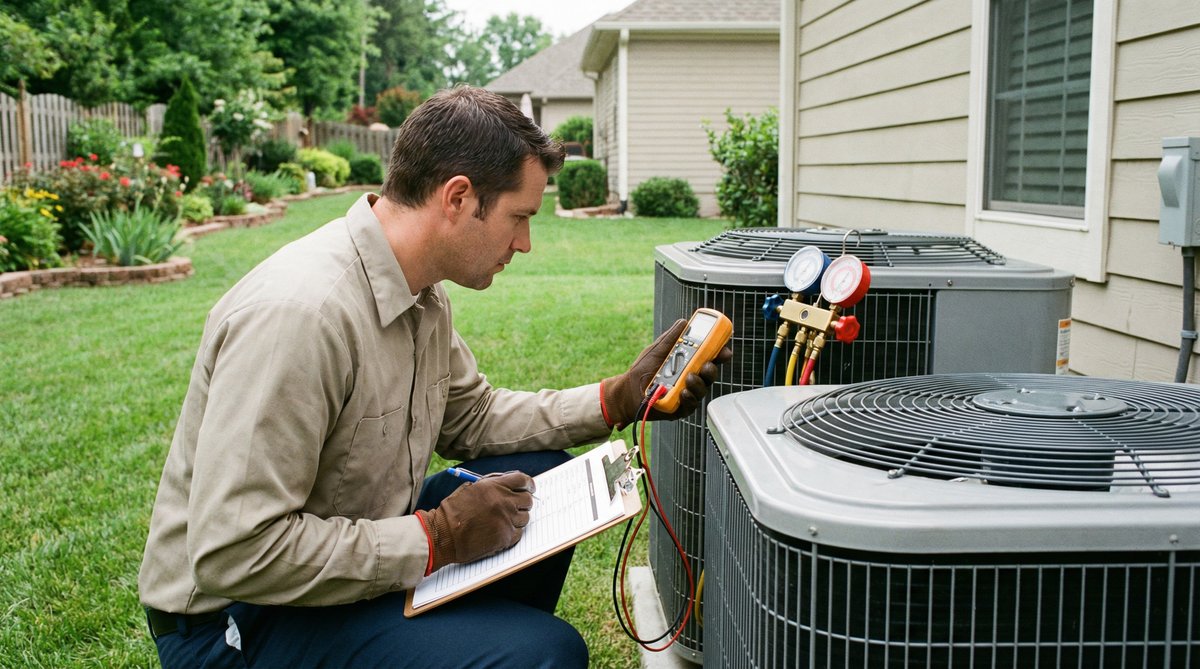
HVAC High Suction Pressure: Causes, Diagnosis, and Pro Solutions
Understanding the intricacies of the refrigeration cycle is the hallmark of a master HVAC technician. When you encounter HVAC high suction pressure, it is rarely an isolated symptom. Instead, it is often a critical indicator of underlying system inefficiencies, ranging from simple overcharging to catastrophic compressor failure. This guide provides a deep dive into the technical causes, diagnostic procedures, and professional insights required to master this common but complex troubleshooting scenario.
The Fundamentals of Suction Pressure
In a standard refrigeration cycle, suction pressure (also known as low-side pressure) represents the pressure of the refrigerant vapor as it leaves the evaporator and enters the compressor. This pressure is directly tied to the temperature of the refrigerant in the evaporator coil. When suction pressure rises above the manufacturer's specified range for a given ambient temperature and heat load, it signals that the evaporator is either absorbing too much heat or the compressor is failing to remove the vapor efficiently. [1]
Technicians must distinguish between "high suction pressure" and "normal variations due to load." A high heat load—such as a building that has been without cooling for hours—will naturally result in higher suction pressure until the space temperature drops. However, if the pressure remains elevated while the space is relatively cool, a mechanical or chemical issue is likely at play.
Top 5 Causes of High Suction Pressure
Identifying the root cause requires a systematic approach. Below are the most frequent culprits encountered in the field.
1. Inefficient or Failing Compressor
One of the most common reasons for high suction pressure is a compressor that is no longer pumping at full capacity. If the internal valves (suction or discharge) are leaking, or if the piston rings are worn, the compressor cannot create the necessary pressure differential. This often manifests as high suction pressure coupled with low head pressure. [2]
"When a compressor has both a low head pressure and a high suction pressure, the equipment is still running, but it is not cooling to its rated capacity. This is often due to bad or leaky compressor valves or worn piston rings." [1]
2. Refrigerant Overcharge
An overcharged system is a frequent "self-inflicted" wound. When too much refrigerant is added, the condenser becomes flooded, reducing its ability to reject heat. This leads to higher subcooling and, eventually, higher suction pressure as the evaporator becomes overwhelmed with liquid refrigerant.
3. Metering Device Malfunctions (TXV/EEV)
The Thermal Expansion Valve (TXV) or Electronic Expansion Valve (EEV) regulates the flow of refrigerant into the evaporator. If the valve is stuck open or "hunting" due to a failed sensing bulb, it will flood the evaporator with more refrigerant than can be boiled off. This results in low superheat and high suction pressure. [3]
4. Excessive Heat Load
While not a mechanical failure, an extreme heat load can mimic high suction pressure. This occurs in scenarios where the system is undersized for the space or if there are significant internal heat gains (e.g., commercial kitchens or server rooms).
5. Dirty or Fouled Condenser Coils
If the condenser cannot reject heat effectively, the entire system's pressure and temperature will rise. While this primarily affects head pressure, the "bottleneck" effect eventually causes suction pressure to climb as well.
Diagnostic Comparison Table
To assist in rapid field diagnosis, use the following table to compare high suction pressure against other key system variables.
| Symptom | Likely Cause | Superheat | Subcooling | Head Pressure |
|---|---|---|---|---|
| High Suction + Low Head | Inefficient Compressor | High | Normal/High | Low |
| High Suction + High Head | Overcharge | Low | High | High |
| High Suction + High Head | Dirty Condenser | High | Low | High |
| High Suction + Low Superheat | Stuck Open TXV | Low | Normal | Normal/High |
Step-by-Step Diagnostic Procedure
When you arrive on-site and identify high suction pressure, follow this professional checklist to isolate the problem:
- Verify Airflow First: Ensure the air filter is clean and the evaporator blower is moving the correct CFM. Restricted airflow usually causes low suction pressure, but it must be ruled out to ensure accurate gauge readings.
- Check Superheat and Subcooling:
- Low Superheat (< 5°F): Suggests a flooded evaporator (overcharge or stuck-open metering device).
- High Superheat (> 20°F): Suggests the evaporator is starving or the compressor is inefficiently pulling vapor.
- Perform the Compressor Pump-Down Test: Close the liquid line service valve and see if the compressor can pull the low side into a vacuum. If it struggles or the pressure rises quickly after the compressor stops, the internal valves are likely leaking. [4]
- Inspect the Metering Device: Check the TXV sensing bulb. Is it securely fastened and insulated? If the bulb has lost its charge, the valve may default to a position that causes incorrect pressure.
- Analyze Amperage Draw: A compressor with failing valves will often have a lower than normal amp draw because it isn't doing the work of compressing the gas effectively. [1]
Alt text: A professional HVAC technician using digital manifolds to diagnose high suction pressure on a residential condensing unit.

Real-World Use Case: The "Ghost" Overcharge
A technician was called to a site where a 5-ton split system was failing to maintain temperature. The suction pressure was 145 PSI (on R-410A), which is significantly higher than the expected ~118 PSI for the 75°F indoor ambient. The initial thought was an overcharge. However, the subcooling was only 8°F (within spec).
Upon further investigation, the technician found that the TXV sensing bulb had fallen off the suction line and was resting against a warm discharge pipe. This caused the TXV to open fully, flooding the evaporator and driving up suction pressure. Simply reattaching and insulating the bulb resolved the "high pressure" issue without removing a drop of refrigerant.
Pro Insights for Contractors
- Don't Just "Gas and Go": Adding refrigerant to a system with high suction pressure is almost always a mistake. If the pressure is high, adding more will only exacerbate the problem or damage the compressor.
- Check the Reversing Valve: On heat pump systems, a leaking reversing valve can allow high-pressure discharge gas to "short-circuit" into the suction line, causing an immediate spike in suction pressure. [5]
- Use Digital Manifolds: Modern digital gauges provide real-time superheat and subcooling calculations, which are essential for identifying the subtle differences between a bad TXV and an overcharge.
Shop HVAC Diagnostic Tools | Browse Replacement Compressors
Frequently Asked Questions (FAQ)
Q: Can a dirty air filter cause high suction pressure?
A: Generally, no. A dirty air filter restricts airflow, which causes suction pressure to drop, often leading to a frozen evaporator coil. High suction pressure is usually a sign of too much refrigerant flow or poor compressor performance.
Q: What is the most common cause of high suction pressure and low head pressure?
A: This combination is a classic sign of an inefficient compressor. If the internal valves or seals are worn, the compressor cannot effectively move refrigerant from the low side to the high side.
Q: How does a stuck-open TXV affect the system?
A: A stuck-open TXV allows too much liquid refrigerant into the evaporator. This causes the suction pressure to rise and the superheat to drop to near zero, which risks "slugging" the compressor with liquid.
Q: Is 130 PSI normal for R-410A suction pressure?
A: It depends on the indoor temperature. At a standard 75°F indoor temperature, 130 PSI is slightly high (roughly 45°F saturation). If the indoor temperature is 85°F, 130 PSI might be normal as the system works to pull down the load.
Call to Action
Need expert assistance or high-quality replacement parts for your next HVAC repair? Our team at HVAC Pro Sales is ready to help you find the right components to get the job done right the first time.
- Shop Online: Visit Our Store
- Technical Support: support@hvacprosales.com
- Call Us: 1-866-330-1709
References
- American Home Water: What Causes High Suction Pressure?
- ACHR News: The Professor - Low Head Pressure, High Suction Pressure
- HVAC Brain: Examining High Suction Pressure & Evaporator Pressure
- Nextech: How to Troubleshoot Air Conditioning Systems
- YouTube: High Suction Pressure Resolved - Reversing Valve Issues