

HVAC Tripping Breaker: 7 Common Causes & How to Fix (Pro Guide)
Published by HVACProSales Team on Mar 26th 2026
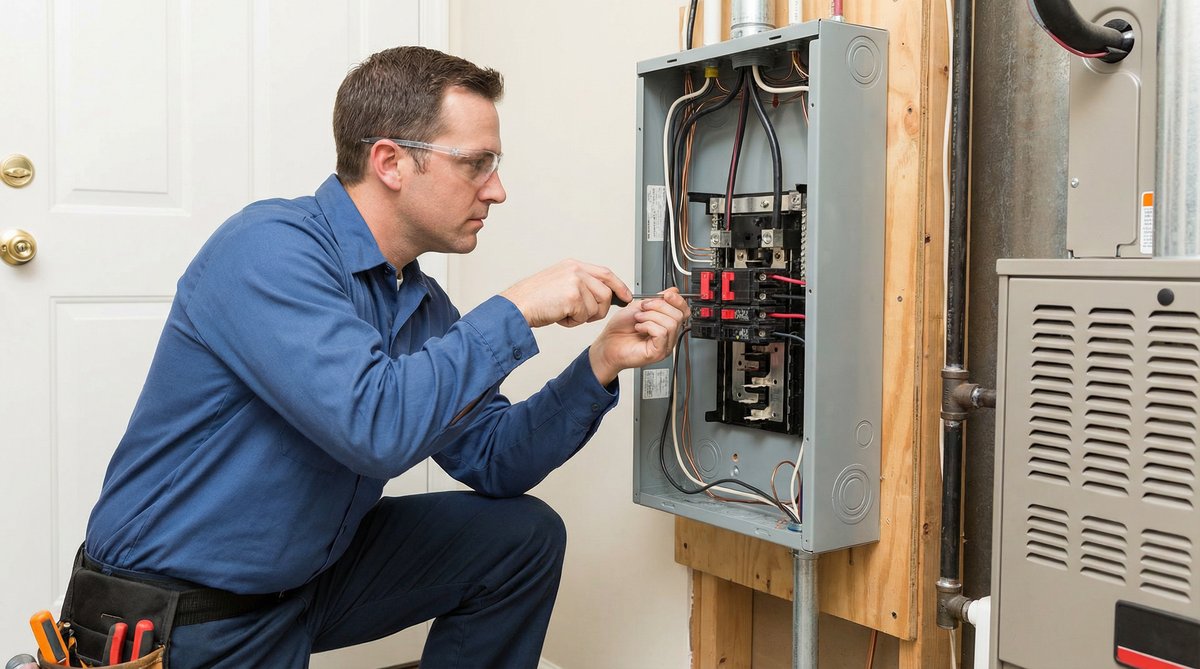
HVAC Tripping Breaker: Causes and How to Diagnose
Is your air conditioning or heating system suddenly cutting out, leaving you in the heat (or cold)? When an HVAC system trips a circuit breaker, it is more than just a minor inconvenience; it is a safety mechanism doing its job. A circuit breaker's primary function is to protect your home from electrical fires by shutting down power when the current (amperage) exceeds safe levels.
If your HVAC keeps tripping the breaker, it is signaling that a component is working too hard, drawing too much power, or experiencing a dangerous electrical fault. In this guide, we will break down the seven most common reasons for a tripping breaker, how to diagnose them, and when you need to call in a professional HVAC technician.
1. Clogged Air Filters: The Silent System Killer
The most common reason for an HVAC system to trip a breaker is also the simplest to fix: a dirty HVAC air filter. When a filter is clogged with dust, pet hair, and debris, it restricts the airflow into your system.
The Cause
To compensate for the lack of air, the blower motor must work significantly harder to pull air through the resistance. This extra effort causes the motor to draw more electricity than it is rated for, eventually exceeding the breaker's limit.
The Solution
Check your air filter immediately. If it is grey, fuzzy, or you cannot see light through it, replace it. We recommend changing filters every 30-90 days depending on your household (pets, allergies, etc.).
Pro Tip: Using a filter with a MERV rating that is too high for your system can also restrict airflow and cause similar issues. Stick to the manufacturer's recommended MERV rating.
2. Dirty Condenser Coils
The outdoor unit (condenser) is responsible for releasing the heat collected from inside your home. Over time, the coils can become covered in dirt, grass clippings, and pollen.
The Cause
When coils are dirty, they cannot dissipate heat efficiently. This causes the entire system to run longer and hotter. As the temperature rises, the compressor has to work harder to move refrigerant, leading to a spike in amperage that trips the breaker.
The Solution
Turn off the power at the outdoor disconnect and gently spray the coils with a garden hose. Avoid using high-pressure washers, as they can bend the delicate aluminum fins. For deep cleaning, consider using a professional-grade coil cleaner.

3. Failing Capacitors
Think of a capacitor as a large battery that provides a "kickstart" to your HVAC motors. There are start capacitors (for initial startup) and run capacitors (to keep the motor spinning efficiently).
The Cause
Capacitors have a limited lifespan and often fail due to heat or age. When a capacitor weakens, the motor it supports (either the compressor or the fan motor) struggles to start or maintain speed. This "stuttering" causes a massive surge in electrical draw, tripping the breaker almost instantly.
The Solution
Inspect your capacitors for physical signs of failure, such as bulging tops or leaking oil. Testing them requires a HVAC multimeter with a capacitance setting. If you are not comfortable working around high-voltage components, this is a job for a pro.
4. Compressor Issues: Hard Starting and Grounding
The compressor is the heart of your HVAC system and the most expensive component to replace. If your breaker trips the moment the outdoor unit tries to kick on, the compressor is a likely suspect.
The Cause
- Hard Starting: As compressors age, they may struggle to overcome the internal pressure of the refrigerant. This requires a huge burst of energy that can trip the breaker.
- Grounded Compressor: This occurs when an internal electrical winding breaks and touches the metal casing of the compressor. This creates a direct path to the ground, causing a "dead short" that trips the breaker immediately for safety.
The Solution
A technician can often save a "hard starting" compressor by installing a Hard Start Kit, which provides extra torque during startup. However, a grounded compressor usually requires a full replacement of the unit.
5. Loose or Damaged Electrical Wiring
HVAC systems vibrate during operation. Over years of use, this vibration can loosen electrical connections at the HVAC contactor replacement, capacitor, or terminal block.
The Cause
Loose connections create high resistance. High resistance generates heat, and heat causes the amperage to climb. Furthermore, wires can sometimes rub against copper tubing or metal housing until the insulation wears through, causing a short circuit.
The Solution
A professional inspection will involve tightening all terminals and inspecting wire harnesses for "rub-throughs" or charred insulation.

6. Refrigerant Levels: Too High or Too Low
Your HVAC system is a sealed loop designed to operate with a specific amount of refrigerant.
The Cause
- Low Refrigerant: Causes the system to run longer and hotter, putting strain on the compressor.
- Overcharged Refrigerant: If a system was improperly serviced and has too much refrigerant, the "head pressure" becomes too high. The compressor has to fight against this pressure, drawing excessive amps.
The Solution
Refrigerant issues can only be diagnosed and fixed by an EPA-certified technician using a HVAC manifold gauge set set.
7. A Weak or Undersized Circuit Breaker
Sometimes, the problem isn't the HVAC system at all—it's the electrical panel.
The Cause
Circuit breakers are mechanical devices that can wear out over time. If a breaker has tripped many times, the internal spring can weaken, causing it to "nuisance trip" at lower amperages than it is rated for. Additionally, if you've recently upgraded your HVAC system to a more powerful model, your existing breaker might be undersized.
The Solution
An electrician can test the breaker's performance and replace it if it is found to be faulty or incorrectly sized for the unit's Minimum Circuit Ampacity (MCA).
Recommended HVAC Parts & Tools
Summary Table: HVAC Tripping Breaker Diagnosis
| Symptom | Likely Cause | Fix Level |
|---|---|---|
| Trips after running for 20+ mins | Dirty Filter / Dirty Coils | DIY |
| Trips immediately upon startup | Short Circuit / Grounded Compressor | Professional |
| Trips randomly or occasionally | Loose Wiring / Weak Breaker | Professional |
| Outdoor fan spins, but breaker trips | Bad Compressor / Capacitor | Professional |
Frequently Asked Questions (FAQ)
1. Should I keep resetting the breaker if it trips?
No. You should only reset a tripped HVAC breaker once. If it trips again immediately, there is a serious electrical fault or mechanical failure. Repeatedly resetting the breaker can cause a fire or permanently damage the compressor.
2. Can a power surge cause my HVAC to trip the breaker?
Yes. A sudden spike in the local power grid or a lightning strike can trip breakers to protect your equipment. If the breaker trips during a storm and stays reset afterward, it was likely a one-time event.
3. How much does it cost to fix a tripping HVAC breaker?
The cost varies wildly. A new air filter is under $20, and a capacitor replacement might cost $150–$300. However, if the compressor is grounded, you may be looking at $2,000+ or a full system replacement.
4. Can I use a larger breaker to stop it from tripping?
Absolutely not. The breaker size is matched to the wire gauge in your walls. Installing a larger breaker without upgrading the wiring is a major fire hazard, as the wires will melt before the breaker trips.
Need Professional Help?
Don't risk damaging your expensive HVAC equipment or your home's electrical system. If you've checked your filters and cleaned your coils but the problem persists, it's time to call the experts.
Whether you need a new capacitor, a hard start kit, or are looking to upgrade to a more efficient system, we have the parts and expertise you need.
- Shop Our Selection: Shop Mini Splits | HVAC Maintenance Kits
- Contact Support: support@hvacprosales.com
- Call Us: 1-866-330-1709