

Mini Split Commissioning Checklist: Post-Installation Guide
Published by HVACProSales Team on Mar 26th 2026
Mini Split Commissioning Checklist: After Installation
Properly installing a ductless mini split system is only half the battle. The transition from a set of mounted components to a high-efficiency climate control system happens during the commissioning phase. Commissioning is the formal process of verifying that the HVAC system is installed according to the manufacturer's specifications and performs at its peak design intent. For contractors, this step is the difference between a satisfied customer and a "callback" nightmare. For homeowners, it is the insurance policy that their investment will last for decades rather than years.
The commissioning process involves a series of rigorous tests, including pressure verification, deep vacuum dehydration, and operational data logging. Skipping these steps often leads to premature compressor failure, refrigerant leaks, or inefficient operation that drives up utility bills. This guide provides a professional-grade checklist for commissioning a mini split system after the physical installation is complete.
Pre-Commissioning: The Visual and Mechanical Audit
Before any gauges are attached or power is applied, a thorough visual inspection is mandatory. This stage ensures that the foundation of the system is sound and that no simple errors will compromise the more technical tests that follow.
Indoor and Outdoor Unit Mounting
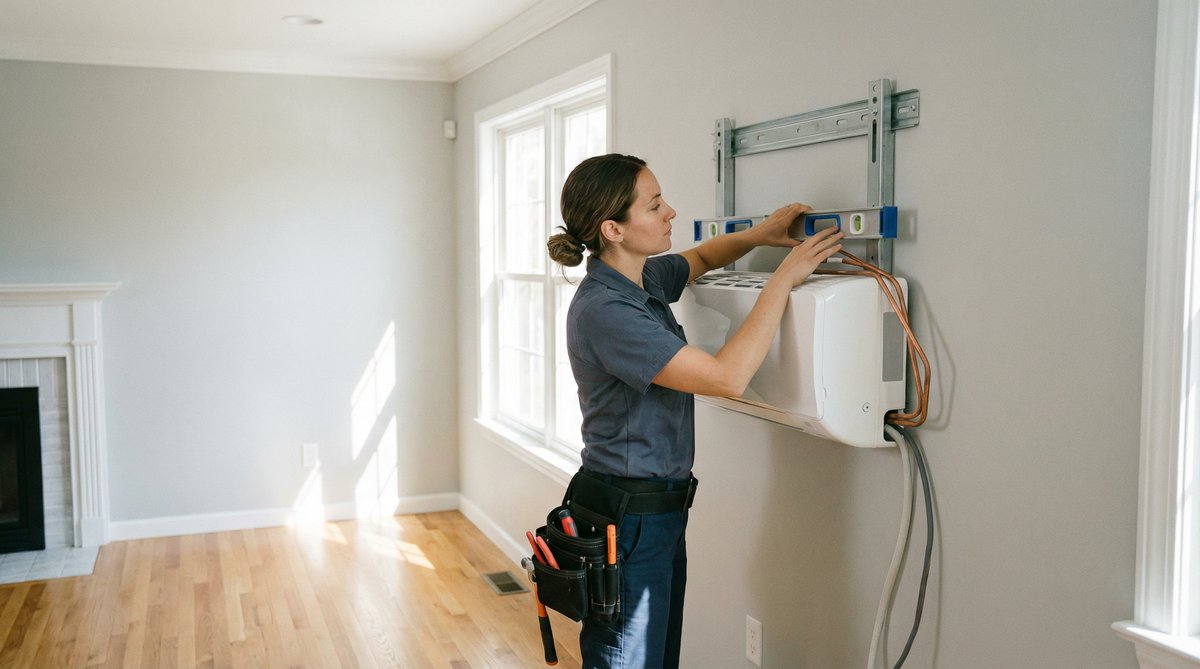
Verify that the indoor unit is perfectly level. An unlevel indoor head can lead to condensate drainage issues, causing water to drip down the wall. Outdoors, the condenser must be mounted on a stable, level pad or wall bracket with sufficient clearance for airflow. Most manufacturers require at least 12 inches of clearance on the back and sides, and up to 24-36 inches in front of the discharge fan.
Electrical and Communication Wiring
Mini split systems are sensitive to wiring errors. Ensure that the communication cable (often referred to as the S1, S2, and S3 lines) is a continuous run of 14/4 stranded shielded wire or as specified by the manufacturer. Loose connections at the terminal block are a leading cause of communication errors (E6 or similar codes). Use a torque screwdriver to ensure all terminals are tightened to the specific inch-pounds required by the manual.
| Component | Inspection Criteria | Expected Result |
|---|---|---|
| Indoor Unit | Leveling and Mounting | Bubble centered; no movement when touched. |
| Outdoor Unit | Clearance and Stability | Minimum 12" rear/side clearance; no vibration. |
| Wiring | Terminal Tightness | Secure connections; no exposed copper outside terminals. |
| Drainage | Pitch and Flow | Minimum 1/4" per foot downward pitch. |
The Nitrogen Pressure Test: Ensuring System Integrity
Once the mechanical installation is verified, the refrigerant circuit must be tested for leaks. While some installers rely on a vacuum to find leaks, a positive pressure test with dry nitrogen is the industry standard. Nitrogen is used because it is inert and does not carry moisture into the system.
The 500 PSI Rule
Professional HVAC standards, such as those from Mitsubishi and Daikin, recommend a multi-stage pressure test. First, pressurize the system to 150 PSI and hold for 15 minutes. If the pressure holds, increase it to 300 PSI for another 15 minutes. Finally, increase the pressure to 500 PSI (or the maximum design pressure listed on the unit's nameplate) and hold for a minimum of one hour, though 24 hours is preferred for critical installations [1].
If the pressure drops, even slightly, you must find the leak. Common culprits include poorly flared fittings or loose service valve caps. Use a high-quality electronic leak detector or a specialized soap solution (like Big Blu) to pinpoint the escape point. Never release refrigerant into a system that has not passed a 500 PSI nitrogen test.
Deep Vacuum and Dehydration
After the system is proven leak-free, the nitrogen is purged, and the system must be evacuated. This process removes non-condensable gases (air) and moisture from the copper tubing. Moisture is the "acid" of an HVAC system; if left inside, it reacts with the refrigerant and oil to form sludge that destroys the compressor.
The Triple Evacuation Method
For the most reliable results, use the triple evacuation method:
1. First Pull: Evacuate the system to 1,500 microns.
2. Break: Break the vacuum with dry nitrogen to 2-3 PSI. The nitrogen absorbs any remaining moisture.
3. Second Pull: Evacuate again to 1,000 microns.
4. Final Pull: Evacuate to below 500 microns.
Once the system reaches 500 microns, perform a "decay test." Close the valve to the vacuum pump and monitor the micron gauge for 10-15 minutes. If the pressure rises and stabilizes below 1,000 microns, the system is dry and leak-free. If it continues to rise indefinitely, there is a leak. If it rises quickly and then levels off at a high number, there is still moisture in the lines [2].
Refrigerant Release and Charge Adjustment
Most mini split outdoor units come pre-charged with enough refrigerant for a specific length of line set (typically 15 to 25 feet). However, if your installation exceeds this "standard" length, you must add additional refrigerant.
Calculating Additional Charge
Check the installation manual for the "ounces per foot" requirement. For example, a system might require 0.22 oz of R-410A for every foot of line set beyond 25 feet.
Pro Tip: Always use a digital scale to weigh in the exact amount of refrigerant. "Guessing" based on pressures is impossible with inverter-driven mini splits because the compressor speed varies constantly.
Once the charge is calculated and added (if necessary), you can slowly open the liquid line service valve followed by the suction line valve to release the factory charge into the evacuated lines.
Operational Startup and Performance Data
With the refrigerant released, it is time to power on the system and verify performance. This is where you document the "birth certificate" of the unit.
Cooling Mode Verification
Set the unit to the lowest temperature setting and high fan speed. Allow the system to run for at least 20 minutes to stabilize. Measure the "Delta T"—the temperature difference between the return air entering the unit and the supply air leaving it. A healthy system should typically show a 18°F to 22°F split.
Heating Mode Verification
Switch the system to heat mode. Verify that the reversing valve engages (you will hear a distinct "whoosh" sound). In heat mode, the indoor unit should produce air that is significantly warmer than the room ambient temperature, often exceeding 100°F depending on outdoor conditions.
| Measurement | Tool Used | Target Range (Cooling) |
|---|---|---|
| Supply Air Temp | Digital Thermometer | 50°F - 58°F (depending on ambient) |
| Return Air Temp | Digital Thermometer | Room Ambient (e.g., 75°F) |
| Delta T (Split) | Calculation | 18°F - 22°F |
| Amp Draw | Clamp Meter | Within Nameplate RLA |
Final Handover and Documentation
The final step of commissioning is ensuring the customer knows how to use their new system.
1. Test the Condensate Drain: Pour a cup of water into the indoor unit's drain pan to ensure it flows freely to the outside.
2. Seal the Wall Hole: Use duct seal or specialized wall sleeves to seal the penetration where the line set exits the building. This prevents pests and unconditioned air from entering.
3. User Education: Show the homeowner how to clean the filters (every 2-4 weeks) and explain the different modes on the remote control. Remind them that "Auto" mode can sometimes cause confusion in multi-zone systems.
Shop Mini Splits | Browse Installation Tools
Need Professional Assistance?
If you encounter any issues during your commissioning process, our technical support team is ready to help.
Contact Us:
Email: support@hvacprosales.com
Phone: 1-866-330-1709
Frequently Asked Questions
Q: Why can't I just use a vacuum pump to test for leaks?
A: A vacuum pump only creates a 14.7 PSI pressure difference. A system might be "tight" at 14.7 PSI but leak significantly under the 400+ PSI pressures generated during normal operation. A nitrogen pressure test is the only way to ensure long-term integrity.
Q: How long should a proper commissioning take?
A: A thorough commissioning process for a single-zone system typically takes 2 to 4 hours, depending on the length of the pressure test and how long it takes to achieve a deep vacuum.
Q: What happens if I don't reach 500 microns?
A: If you cannot reach 500 microns, there is either a leak in your setup (check your hoses and gaskets) or moisture in the system. Continuing without a deep vacuum will lead to "acid" formation in the oil, eventually killing the compressor.
References
[1] Mitsubishi Electric M-Series Commissioning Guide
[2] HVAC School: The Theory of Evacuation