

Single Zone vs Multi-Zone Mini Split: Which Is Right for Your Home? — 2026 Guide — 2026 Verdict
Published by HVACProSales Team on Mar 26th 2026
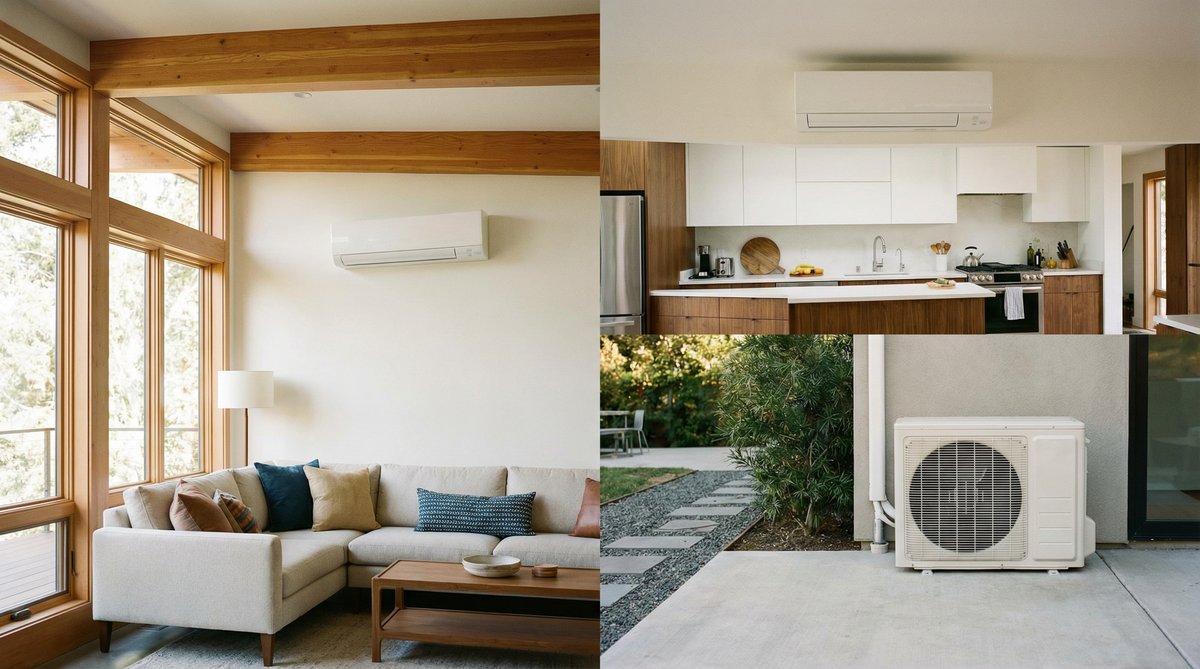
Single Zone vs Multi-Zone Mini Split: Which Is Right for Your Home?
Choosing between a single zone and a multi-zone mini split is one of the most critical decisions you will make when upgrading your home’s HVAC system. As an HVAC professional, I often see homeowners struggle with this choice, often defaulting to a multi-zone system because it sounds more "advanced." However, the right answer depends entirely on your home's layout, your comfort priorities, and your long-term budget. In this guide, we will break down the technical differences, pros and cons, and real-world scenarios to help you decide which configuration is the best fit for your needs.
⚖ Quick Comparison Summary
- Efficiency: Compare SEER2 ratings — higher = lower operating cost
- Upfront cost: Single-zone systems cost $700–$2,500 installed
- Installation: DIY-friendly pre-charged systems save $500–$1,500 in labor
- Reliability: Mitsubishi, Daikin, and Fujitsu rank highest for longevity
- Parts availability: Choose brands with OEM parts readily available
Understanding the Technical Core: Single vs. Multi-Zone
At its simplest, the difference between these two systems lies in the ratio of indoor units to outdoor condensers. A single zone mini split consists of one indoor air handler connected to one outdoor condenser. This setup is a closed loop dedicated entirely to a single space, providing maximum efficiency for that specific area [1].
Conversely, a multi-zone mini split uses a single, larger outdoor condenser to power multiple indoor air handlers—typically anywhere from two to eight units. These indoor units are connected to the outdoor condenser via individual line sets, allowing for independent temperature control in different rooms [2]. While this saves outdoor space, it introduces complexity in how the system manages refrigerant flow to multiple locations simultaneously.
The Efficiency Paradox
Many homeowners assume that one large outdoor unit is more efficient than two or three smaller ones. In reality, single zone systems often boast higher SEER2 (Seasonal Energy Efficiency Ratio) ratings [1]. This is because the outdoor unit is perfectly matched to the indoor unit's capacity. Multi-zone condensers must be versatile enough to handle varying loads, which can sometimes lead to slight efficiency losses when only one or two small zones are calling for cooling. For example, a single-zone unit might achieve 30+ SEER2, while multi-zone systems typically range between 18 and 22 SEER2 [3].
Single Zone Mini Splits: The Reliable Workhorse
Single zone systems are the gold standard for targeted comfort. They are most commonly used in additions, garages, or specific "trouble spots" in a home where the central HVAC fails to keep up.
Advantages of Single Zone Systems
- Maximum Efficiency: Because the components are matched 1-to-1, these systems can reach SEER2 ratings that multi-zone systems simply cannot match. This translates to lower monthly utility bills for that specific space.
- Redundancy and Reliability: If you have three single zone systems and one fails, the other two rooms remain perfectly comfortable. In a multi-zone setup, a single condenser failure takes down the entire system, leaving your whole house without climate control until a technician arrives.
- Simpler Installation: Installing a single zone system is straightforward. There is no need for complex manifold distribution or long, winding line sets through the attic or crawlspace, which reduces labor costs [4].
- Lower Entry Cost: If you only need to cool one room today, the upfront investment is significantly lower than buying a multi-zone condenser that you might not fully utilize yet.
Best Use Cases for Single Zone
- Detached Structures: Garages, workshops, or "she-sheds" where running long line sets from the main house is impractical.
- Master Suites: When you want the bedroom at 68°F but the rest of the house at 74°F, a dedicated single zone provides the most precise control.
- Gradual Upgrades: Homeowners who want to phase their HVAC investment over several years, adding one room at a time as the budget allows.
Alt text: A professional HVAC technician installing a single zone mini split outdoor condenser on a wall-mounted bracket for maximum efficiency.
Multi-Zone Mini Splits: The Whole-Home Solution
Multi-zone systems are designed for comprehensive climate control. They are ideal for homes where you want to eliminate window units or baseboard heaters across multiple rooms while keeping the exterior of your home looking clean.
Advantages of Multi-Zone Systems
- Curb Appeal: Instead of having three or four outdoor units lined up against your house, you have just one. This is often a requirement in strict HOA communities or for homes with limited yard space [2].
- Centralized Power: You only need one electrical circuit and one mounting pad for the outdoor unit, which can simplify the electrical work if your panel has limited space.
- Flexible Indoor Options: You can mix and match indoor units. For example, you could have a high-wall unit in the bedroom, a floor-mounted unit in the living room, and a ceiling cassette in the kitchen—all running off the same condenser [3].
Technical Challenges to Consider
The biggest challenge with multi-zone systems is load matching. If you have a 36,000 BTU condenser but are only running one 9,000 BTU indoor unit at night, the condenser may have to "cycle" or throttle down to its minimum capacity. If the minimum capacity is still higher than what the room needs, you may experience less-than-ideal dehumidification [1]. Furthermore, most residential multi-zone systems can only operate in one mode at a time; you cannot heat one room while cooling another [2].
Best Use Cases for Multi-Zone
- Whole-Home Retrofits: Replacing an old boiler or baseboard system in a multi-room house where you want a unified solution.
- Limited Outdoor Space: When you don't have the footprint for multiple condensers due to narrow side yards or urban lot sizes.
- HOA Restrictions: When aesthetic rules limit the number of visible outdoor appliances to a single unit.
Alt text: A diagram showing a multi-zone mini split system with one outdoor condenser connected to three different indoor units in a residential home.
Comparison Table: At-a-Glance
| Feature | Single Zone System | Multi-Zone System |
|---|---|---|
| Indoor Units | 1 | 2 to 8 (depending on model) |
| Outdoor Units | 1 per zone | 1 total |
| Average SEER2 | Higher (Up to 30+) | Moderate (Typically 18-22) |
| Installation Complexity | Low | High (Complex line set routing) |
| Redundancy | High (Independent units) | Low (Single point of failure) |
| Exterior Footprint | Larger (Multiple units) | Compact (One unit) |
| Best For | Targeted areas / Additions | Whole-home / Multi-room |
Pro Insight: The "Multiple Single Zone" Strategy
Here is a secret that many contractors won't tell you: Sometimes, installing two or three single zone systems is better than one multi-zone system.
If you have the outdoor space, using multiple single zones often results in better efficiency, better dehumidification, and a lower total cost of ownership over 15 years. Single zone parts are more standardized and easier to source, and the labor for troubleshooting is significantly reduced because the systems are simpler. However, if you are limited by electrical panel space or local codes, the multi-zone system is a fantastic piece of engineering that provides unmatched flexibility for complex floor plans [1].
Frequently Asked Questions (FAQ)
1. Can I add more indoor units to my multi-zone system later?
Only if your outdoor condenser has the "ports" and the BTU capacity to handle it. You cannot add a 4th indoor unit to a 3-port condenser. Always size your condenser for your final goal, even if you only install two units today [2].
2. Do multi-zone systems allow different temperatures in each room?
Yes! Each indoor unit has its own thermostat and remote. You can set the nursery to 72°F and the home office to 68°F simultaneously. However, they must all be in the same mode—either all heating or all cooling [3].
3. Which system is cheaper to install?
For a single room, a single zone is much cheaper. For a 4-room house, a multi-zone system is often slightly cheaper than four separate single zone systems because you save on the total number of outdoor units and some electrical mounting materials [4].
4. Does a multi-zone system use more electricity?
While the condenser is larger, it uses inverter technology to "throttle down" its power usage based on how many indoor units are active. However, single zones are technically more efficient because they don't have the "overhead" of managing multiple refrigerant circuits [1].
Final Verdict: Which Is Right for You?
Choose a Single Zone Mini Split if you are looking to fix a specific hot or cold spot, want the highest possible energy savings, or want a system that is easy and cheap to maintain over time. Shop Single Zone Mini Splits
Choose a Multi-Zone Mini Split if you are conditioning three or more rooms, have limited outdoor space, or want to maintain the cleanest possible aesthetic for your home's exterior. Shop Multi-Zone Mini Splits
Still not sure which configuration fits your floor plan? Our experts are here to help you size your system perfectly.
Contact HVAC Pro Sales Support:
? support@hvacprosales.com
? 1-866-330-1709
References
- Single-Zone vs Multi-Zone Mini Splits (Pros, Cons, Cost) | MRCOOL DIY Direct
- Multi-zone vs Single-Zone Mini Split Systems | Gree Comfort
- Single Vs. Multi Zone Mini Split Systems | Carrier
- Ductless Mini Split Installation Cost: 2025 Report | RJ Groner
Recommended HVAC Parts & Tools
⚡ Quick Answer
Both options have merit depending on your specific application. Consider efficiency ratings (SEER/EER), upfront cost, installation complexity, and long-term reliability. For most residential applications, the higher-efficiency option pays for itself within 3–5 years.
Key Takeaways
- Mini split systems offer 20–40% higher efficiency than traditional central air systems.
- Proper refrigerant charge is critical — always verify with calibrated gauges.
- Regular filter cleaning every 2–4 weeks extends system lifespan significantly.
- Most mini split issues are caused by dirty coils, low refrigerant, or electrical faults.
- OEM replacement parts ensure compatibility and maintain warranty coverage.
Common Mistakes to Avoid
- Incorrect refrigerant charge: Overcharging or undercharging reduces efficiency and damages the compressor. Always charge by weight or superheat/subcooling method.
- Skipping the vacuum pull: Failing to pull a deep vacuum (500 microns or less) leaves moisture in the system, causing acid formation and compressor failure.
- Wrong line set size: Using undersized copper line sets increases pressure drop and reduces system efficiency.
- Ignoring drain slope: Improper condensate drain slope causes water backup and indoor unit leaks.
🛒 Shop HVAC Parts & Tools — Fast Shipping
-
Shop Mini Split Replacement Parts →
OEM-quality parts for all major brands — fast shipping -
Shop Mini Split Accessories →
Line set covers, brackets, condensate pumps & more -
Shop Complete Mini Split Systems →
Single-zone and multi-zone systems from top brands
Questions? Call 1-866-330-1709 or email support@hvacprosales.com