

HVAC Scroll Compressor vs Reciprocating: Key Differences Explained (2026)
Published by HVACProSales Team on Mar 26th 2026
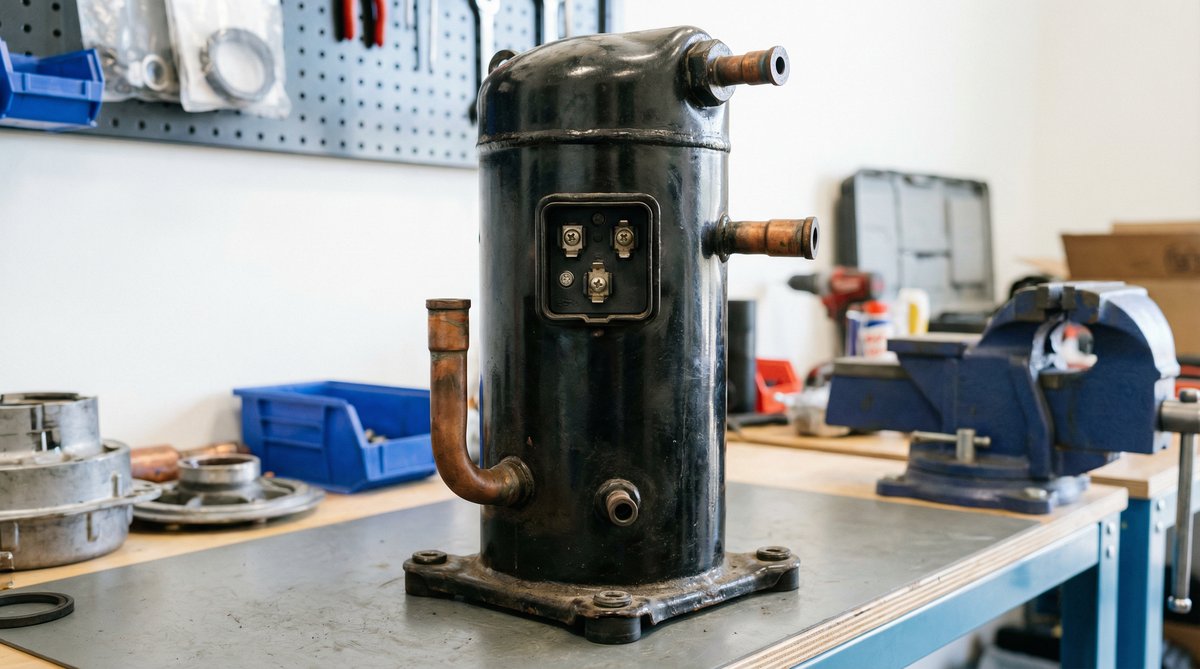
HVAC Scroll Compressor vs Reciprocating: Key Differences
Choosing the right compressor for an HVAC system is a critical decision that impacts energy efficiency, noise levels, and long-term maintenance costs. The compressor is the heart of the refrigeration cycle, responsible for pumping refrigerant through the system to provide cooling or heating. In the modern HVAC landscape, two primary technologies dominate the market: the traditional reciprocating compressor and the increasingly popular scroll compressor.
⚖ Quick Comparison Summary
- Check the thermostat settings and battery first
- Inspect the air filter — replace if dirty or clogged
- Check the circuit breaker and reset if tripped
- Inspect the capacitor and contactor for visible damage
- Verify refrigerant pressure is within spec using manifold gauges
- Call a licensed technician if the fault is not identified
While both are positive displacement compressors, their internal mechanisms and performance characteristics differ significantly. This guide explores the technical nuances, real-world applications, and professional insights necessary to determine which compressor technology is best suited for your specific HVAC needs.
What is a Reciprocating Compressor?
The reciprocating compressor, often referred to as a piston compressor, has been the industry workhorse for over a century. Its design is mechanically similar to an internal combustion engine, utilizing a crankshaft, connecting rods, and pistons. The compression process occurs within a cylinder as the piston moves up and down (reciprocates).
During the downward stroke, the piston creates a vacuum that pulls low-pressure refrigerant gas through a suction valve. As the piston moves upward, it compresses the gas until the pressure is high enough to force it through a discharge valve and into the condenser. This intermittent compression cycle is robust and reliable, particularly in high-pressure applications.
Pro HVAC Insight: Reciprocating compressors are still widely used in commercial refrigeration and industrial cooling. Their ability to handle high compression ratios and their relative ease of field service make them a preferred choice for technicians working on older systems or specialized refrigeration units.
What is a Scroll Compressor?
The scroll compressor represents the modern standard for residential and light commercial HVAC systems. Instead of pistons, it uses two interleaving spiral-shaped components known as scrolls. One scroll remains fixed while the other orbits around it without rotating. This orbiting motion creates crescent-shaped pockets of refrigerant gas that are gradually pushed toward the center of the scrolls, increasing in pressure as the pockets shrink.
Because the scrolls do not touch, there is virtually no friction or mechanical wear between the compression surfaces. This design allows for continuous compression, resulting in a much smoother and quieter operation compared to the pulsating nature of a reciprocating unit.

One of the most significant advantages of the scroll compressor is its mechanical simplicity. With nearly 70% fewer moving parts than a reciprocating compressor, there are fewer components that can fail, leading to higher overall reliability in standard air conditioning applications.
Head-to-Head: Scroll vs. Reciprocating
To better understand the practical differences between these two technologies, we can compare them across several key performance metrics.
| Feature | Scroll Compressor | Reciprocating Compressor |
|---|---|---|
| Volumetric Efficiency | High (95-100%) | Moderate (70-85%) |
| Noise Levels | Very Quiet (Smooth motion) | Loud (Pulsating/Vibration) |
| Durability | High (Fewer moving parts) | Moderate (Valves/Rings wear out) |
| Repairability | Low (Usually replaced) | High (Can be rebuilt/serviced) |
| Initial Cost | Higher | Lower |
| Liquid Handling | Excellent (Scrolls can separate) | Poor (Risk of "slugging" damage) |
Shop High-Efficiency Air Conditioners
Volumetric Efficiency and Performance
The primary technical advantage of the scroll compressor is its superior volumetric efficiency. In a reciprocating compressor, there is always a small amount of "clearance volume" at the top of the piston stroke where high-pressure gas remains trapped. This gas must expand before the suction valve can open again, which reduces the overall efficiency of the machine.
Scroll compressors eliminate this clearance volume because the gas is continuously moved toward the discharge port. This results in nearly 100% volumetric efficiency, allowing the compressor to provide more cooling capacity for every watt of electricity consumed. For homeowners looking to maximize their SEER2 ratings, a scroll compressor is almost always the better choice.

Real-World Use Cases: Which One Do You Need?
When deciding between a scroll vs reciprocating compressor, the application is the most important factor. For residential AC and heat pump installations, the scroll compressor is the industry standard. Its quiet operation and high efficiency make it the preferred choice for modern homes where comfort and energy savings are top priorities.
However, the reciprocating compressor still has its place in the market. In commercial refrigeration and high-pressure industrial cooling, its ability to be field-serviced and rebuilt is a major advantage. If a valve fails in a reciprocating compressor, it can often be replaced by a skilled technician. In contrast, a failed scroll compressor usually requires a complete unit replacement.
Pro Tip for HVAC Contractors: If you're replacing a compressor in an older system, always check the mounting and vibration pads. Reciprocating compressors generate significantly more vibration than scroll units, and failing to properly isolate them can lead to noisy ductwork and premature mini split line set failure.
Troubleshooting: Identifying Failure Modes
Understanding the common failure modes of each compressor type is essential for effective HVAC maintenance. In a reciprocating compressor, the most common failures involve the suction and discharge valves. Over time, these valves can wear out or break, leading to a loss of compression and system efficiency.
In a scroll compressor, the failure mode is often related to the bearings or motor windings. Because the scrolls themselves have very few contact points, they rarely wear out. However, if the system is not properly maintained and the lubrication fails, the entire scroll assembly can seize, necessitating a full replacement.
HVAC manifold gauge set set" src="https://images.hvacprosales.com/blog/compressor-troubleshooting.jpg" />
FAQ: Frequently Asked Questions
1. Can I replace a reciprocating compressor with a scroll compressor?
In most cases, yes, provided the capacity and electrical requirements are compatible. However, you must also consider the physical dimensions and the mounting points, as scroll compressors are typically taller and thinner than reciprocating units.
2. Which compressor type is more expensive to repair?
While reciprocating compressors are more complex, they are often more affordable to repair because individual parts like valves and gaskets can be replaced. Scroll compressors are generally considered "non-serviceable" and require a full replacement if they fail.
3. How long does each type of compressor typically last?
Both types can last 10-15 years with proper maintenance. However, scroll compressors are often more reliable in residential applications because they have 70% fewer moving parts and can better handle small amounts of liquid refrigerant "slugging."
4. Is a scroll compressor always more energy-efficient?
Yes, at standard operating conditions, a scroll compressor will typically have a higher Energy Efficiency Ratio (EER) than a reciprocating compressor of the same capacity due to its higher volumetric efficiency.
Recommended HVAC Parts & Tools
Conclusion: The Winner for Modern HVAC
For the vast majority of residential and light commercial HVAC applications, the scroll compressor is the clear winner. Its combination of high efficiency, quiet operation, and mechanical simplicity makes it the superior choice for modern cooling systems. While reciprocating compressors remain relevant for specialized industrial and refrigeration needs, the scroll has earned its place as the heart of the modern air conditioner.
If you're looking to upgrade your HVAC system or need high-quality replacement parts, visit our shop for a wide selection of top-tier compressors and components.
Need assistance? Contact our support team:
? support@hvacprosales.com | ? 1-866-330-1709
⚡ Quick Answer
Both options have merit depending on your specific application. Consider efficiency ratings (SEER/EER), upfront cost, installation complexity, and long-term reliability. For most residential applications, the higher-efficiency option pays for itself within 3–5 years.
Key Takeaways
- Compressor failure is often caused by low refrigerant, dirty coils, or electrical issues.
- Always check capacitors and contactors before condemning a compressor.
- A hard start kit can extend compressor life by reducing startup amperage.
- Megger testing confirms whether a compressor winding is grounded.
- Replacing a compressor costs 40–60% of a new unit — weigh the economics carefully.
Common Mistakes to Avoid
- Skipping the diagnostic step: Replacing parts without proper diagnosis wastes money and time.
- Ignoring electrical safety: Always verify power is off with a non-contact voltage tester before touching any wiring.
- Using non-OEM parts: Cheap aftermarket parts often fail prematurely and may void equipment warranties.
- Not documenting repairs: Failing to log refrigerant amounts and part numbers creates compliance and warranty issues.
🛒 Shop HVAC Parts & Tools — Fast Shipping
-
Shop HVAC Compressors →
Scroll, reciprocating & rotary compressors — all tonnages -
Shop Hard Start Kits & Capacitors →
Reduce compressor startup amperage and extend lifespan -
Shop HVAC Diagnostic Tools →
Meggers, clamp meters & more for compressor testing
Questions? Call 1-866-330-1709 or email support@hvacprosales.com