

HVAC Tonnage Calculation Guide: How to Size Your System Correctly
Published by HVACProSales Team on Mar 26th 2026
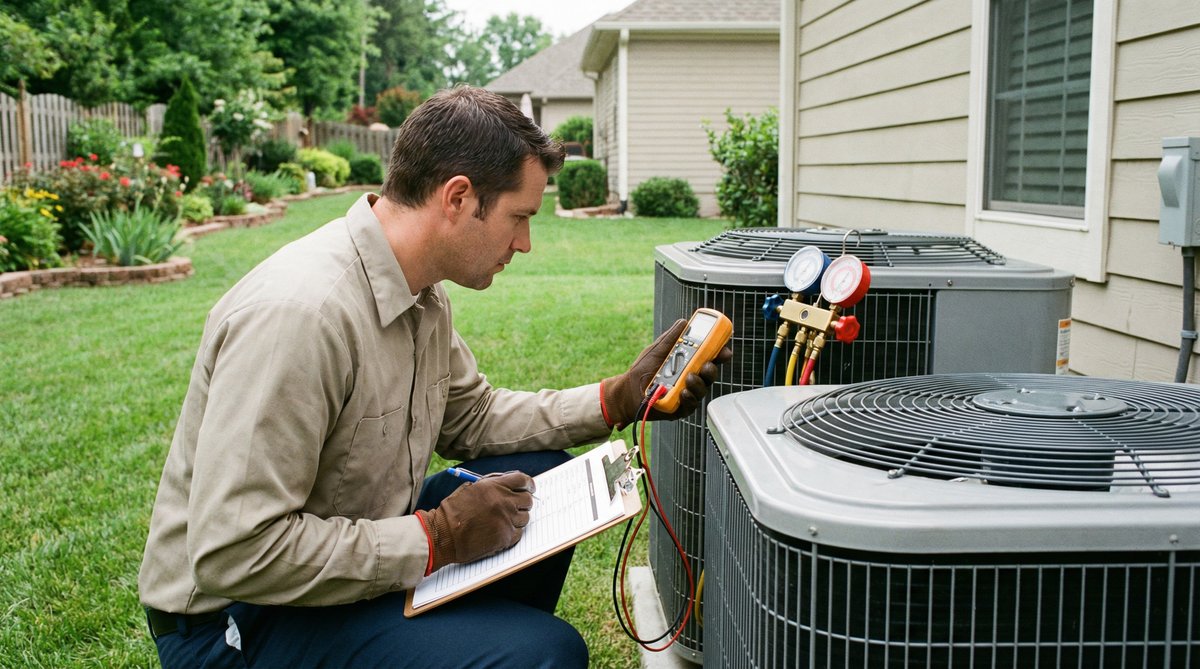
Understanding HVAC Tonnage: How to Calculate System Size
Choosing the right size for your heating and cooling system is one of the most critical decisions a homeowner or contractor can make. In the HVAC industry, "size" doesn't refer to the physical dimensions of the unit, but rather its cooling and heating capacity, measured in tonnage. Installing a system that is too small will leave your home uncomfortable during peak summer heat, while an oversized unit will short-cycle, leading to high energy bills, poor humidity control, and premature equipment failure.
This guide provides a deep dive into HVAC tonnage calculation, moving beyond simple "rules of thumb" to the professional standards used by technicians to ensure peak performance and efficiency.
What is HVAC Tonnage?
In HVAC terms, a "ton" is a measurement of a unit's ability to remove heat from a space. Specifically, one ton of air conditioning is defined as the ability to remove 12,000 British Thermal Units (BTUs) of heat per hour.
Technical Definition: One ton of refrigeration is the amount of heat required to melt one ton (2,000 lbs) of ice over a 24-hour period. This equates to 12,000 BTUs per hour. [1]
The term dates back to the days before mechanical refrigeration, when ice was used to cool buildings. A building that needed "one ton of cooling" literally required a ton of ice to be delivered every day. Today, we use this same unit of measure to describe the capacity of modern condensers and air handlers.
Common Tonnage to BTU Conversions
| System Size (Tons) | Cooling Capacity (BTUs/hr) | Typical Square Footage (Estimate) |
|---|---|---|
| 1.5 Tons | 18,000 BTUs | 600 - 900 sq. ft. |
| 2.0 Tons | 24,000 BTUs | 901 - 1,200 sq. ft. |
| 2.5 Tons | 30,000 BTUs | 1,201 - 1,500 sq. ft. |
| 3.0 Tons | 36,000 BTUs | 1,501 - 1,800 sq. ft. |
| 3.5 Tons | 42,000 BTUs | 1,801 - 2,100 sq. ft. |
| 4.0 Tons | 48,000 BTUs | 2,101 - 2,400 sq. ft. |
| 5.0 Tons | 60,000 BTUs | 2,401 - 3,000 sq. ft. |
Residential systems typically range from 1.5 to 5 tons. If a building requires more than 5 tons, it usually necessitates multiple residential units or a commercial-grade system.
How to Calculate HVAC Tonnage: The Methods
There are two primary ways to determine the required tonnage for a home: the "Rule of Thumb" for quick estimates and the "Manual J Load Calculation" for professional-grade accuracy.
1. The Square Footage Rule of Thumb (Estimation Only)
Many contractors use a simplified formula for a ballpark estimate: (Square Footage × 25) / 12,000 = Tonnage. [2]
For example, for a 2,000-square-foot home:
1. 2,000 sq. ft. × 25 BTU/sq. ft. = 50,000 BTUs
2. 50,000 / 12,000 = 4.16 Tons
3. Result: You would likely look at a 4-ton or 4.5-ton unit.
Pro Insight: While fast, this method is often inaccurate because it ignores critical factors like insulation quality, window efficiency, and local climate. Modern, high-efficiency homes with spray foam insulation and triple-pane windows often require significantly less tonnage than this rule suggests. Conversely, an old farmhouse with zero insulation might need double the "rule of thumb" estimate.
2. The Professional Standard: Manual J Load Calculation
The Air Conditioning Contractors of America (ACCA) developed the Manual J protocol, which is the industry standard for precise sizing. [3] A true Manual J calculation considers every variable that affects heat gain and loss:
- Local Climate Data: A 2,000 sq. ft. home in Phoenix, AZ needs more cooling than the same home in Seattle, WA because the "design temperature" (the outdoor temperature the system is expected to handle) is much higher.
- Building Orientation: A home with large south-facing windows will experience significant "solar gain" compared to a north-facing home.
- Insulation Levels: The R-values of walls, ceilings, and floors are entered into the software to determine how much heat leaks in or out.
- Occupancy: Each human body adds approximately 250 BTUs of sensible heat and 200 BTUs of latent heat per hour.
- Appliances and Lighting: Kitchens, high-end electronics, and even LED lighting contribute to the internal heat load.
- Ductwork Location: Ducts running through an uninsulated attic lose efficiency compared to ducts within the conditioned space.
Alt Text: Infographic showing heat gain factors like sun exposure, insulation, and occupancy for Manual J calculations.

Real-World Use Case: The Danger of Over-Sizing
A common mistake among homeowners is thinking "bigger is better." If you install a 5-ton unit in a home that only needs 3 tons, you will experience short-cycling, which leads to three major problems:
1. Poor Dehumidification
Air conditioners don't just cool the air; they remove moisture. The evaporator coil needs to stay cold for a significant amount of time to condense water vapor from the air. A massive unit cools the air so quickly that it reaches the thermostat setpoint and shuts off in 5-10 minutes. This isn't long enough to remove humidity, leaving your home feeling "cold and clammy."
2. Increased Wear and Tear
The most stressful part of an HVAC cycle is the startup. The compressor draws a high "inrush current" every time it kicks on. Short-cycling means the compressor starts and stops 4-5 times more frequently than it should, leading to mechanical failure years before the unit's expected lifespan.
3. Uneven Temperatures
Because the unit shuts off so quickly, the air doesn't have time to circulate properly through every room. You'll end up with a living room that feels like a freezer while the back bedrooms remain warm and stagnant.
Shop High-Efficiency Heat Pumps
Regional Climate Adjustments
The "BTU per square foot" requirement varies wildly based on your geographic location. The U.S. Department of Energy divides the country into climate zones for HVAC sizing and efficiency standards:
| Climate Zone | Region Examples | Estimated BTUs per Sq. Ft. |
|---|---|---|
| Zone 1 | Miami, FL; Brownsville, TX | 30 - 35 BTUs |
| Zone 2 | Houston, TX; New Orleans, LA | 25 - 30 BTUs |
| Zone 3 | Atlanta, GA; Dallas, TX | 20 - 25 BTUs |
| Zone 4 | New York, NY; St. Louis, MO | 15 - 20 BTUs |
| Zone 5 | Chicago, IL; Minneapolis, MN | 10 - 15 BTUs |
Note: These are estimates. A home with high-performance insulation in Zone 1 might actually have a lower BTU requirement than a drafty home in Zone 3.
Alt Text: Map of the United States divided into 5 HVAC climate zones for BTU calculation.

Simple Step-by-Step Calculation Guide
If you are a DIYer or just want to check your contractor's work, follow these steps for a more refined estimate that goes beyond square footage:
- Calculate Conditioned Square Footage: Only include areas that will be directly served by the HVAC system.
- Identify Your Climate Multiplier: Use the table above to find your regional BTU factor.
- Account for Windows: Add 1,000 BTUs for every exterior window. If you have high-efficiency double-pane windows, you can reduce this to 500 BTUs.
- Account for Exterior Doors: Add 1,000 BTUs for each door leading outside.
- Account for Occupants: Add 250 BTUs for every person who regularly lives in the home.
- Total and Convert: Sum the BTUs and divide by 12,000 to get the tonnage.
Example Calculation:
A 1,800 sq. ft. home in Zone 4 (St. Louis) with 12 windows, 2 doors, and 4 occupants:
* Base: 1,800 × 18 (Zone 4 factor) = 32,400 BTUs
* Windows: 12 × 1,000 = 12,000 BTUs
* Doors: 2 × 1,000 = 2,000 BTUs
* Occupants: 4 × 250 = 1,000 BTUs
* Total: 47,400 BTUs
* Tonnage: 47,400 / 12,000 = 3.95 Tons
* Recommendation: A 4-ton unit would be the perfect fit for this application.
Shop Mini Splits for Zoned Cooling
Technical Explanation: Sensible vs. Latent Heat
When calculating tonnage, professionals look at two types of heat:
* Sensible Heat: This is the heat you can feel and measure with a thermometer (the temperature of the air).
* Latent Heat: This is the heat associated with moisture (humidity).
A proper HVAC sizing ensures the unit has enough "Latent Capacity" to handle the humidity in your specific region. In humid areas like Florida, a unit might need a larger evaporator coil to handle the massive latent load, even if the square footage is small.
Frequently Asked Questions (FAQ)
1. Can I just look at my old unit to see what size I need?
While your old unit gives you a starting point, it's not foolproof. If your home has had new windows, added insulation, or an addition since the last unit was installed, your tonnage requirements have changed. Furthermore, many older systems were habitually oversized by contractors who used the "bigger is better" mentality. Always perform a fresh calculation.
2. What happens if my HVAC tonnage is too low?
If the unit is undersized, it will run constantly without ever reaching the set temperature on the thermostat during the hottest part of the day. This leads to extremely high electricity bills, excessive wear on the motor, and a home that stays uncomfortably warm.
3. Is tonnage the same for heat pumps and air conditioners?
Yes, the measurement of cooling capacity (BTUs) is the same. However, for heat pumps, you also need to consider the heating load. In northern climates, the heating load is often much higher than the cooling load. You may need a unit sized for the cooling load with supplemental electric heat strips to handle the coldest winter nights.
4. How do I find the tonnage of my current unit?
Look at the data plate on your outdoor condenser. Find the model number (not the serial number). It will usually contain a two-digit number divisible by 6 or 12 (e.g., 18, 24, 30, 36, 42, 48, 60). Divide that number by 12 to get the tonnage. For example, a model number containing "36" is a 3-ton unit (36,000 / 12,000 = 3).
5. Does ceiling height affect HVAC tonnage?
Absolutely. Standard calculations assume an 8-foot ceiling. If you have vaulted ceilings or 10-foot ceilings throughout the home, you have more volume of air to cool. You should increase your BTU estimate by approximately 10-15% for every 2 feet of additional ceiling height.
Expert Support for Your HVAC Project
Sizing your system correctly is the difference between a 20-year investment and a 5-year headache. At HVAC Pro Sales, we help contractors and homeowners select the perfect equipment for their specific needs, ensuring every BTU is accounted for.
Need help with your HVAC tonnage calculation?
* Call Us: 1-866-330-1709
* Email: support@hvacprosales.com
* Browse: View All HVAC Systems