
-
$1,024.00 ex. Tax
-
$3,831.00 ex. Tax
-
$222.00 ex. Tax
-
$593.00 ex. Tax
Commercial & Specialty
(Showing 4 of 4)Commercial • Specialty • Advanced HVAC
Commercial & Specialty
The Commercial & Specialty category is built for contractors and facilities teams sourcing equipment for larger buildings, multi-zone comfort, and specialized applications. These systems are designed for performance, reliability, and serviceability in environments where sizing, controls, and compatibility matter.
Explore Commercial Split Systems for ducted high-capacity installs, and Chillers & VRF for advanced zoning, higher efficiency, and large-scale climate control. Use these sections to shop by system type, capacity requirements, and project intent.
- Commercial Split Systems for high-capacity ducted heating/cooling
- Chillers & VRF for advanced zoning and scalable building comfort
- Confirm: capacity, electrical, controls, and equipment match-ups
- Best for: contractor installs, facility upgrades, and replacement projects
Selection checklist: verify load/capacity, voltage/phase, control strategy, and any project requirements for staging, redundancy, or zoning. Commercial equipment often requires careful planning for service access, airflow, and commissioning.
Pro tip: For commercial projects, speed comes from good upfront data. Confirm capacity + electrical + controls first, then finalize match-ups and accessories.
Commercial & Specialty Subcategories
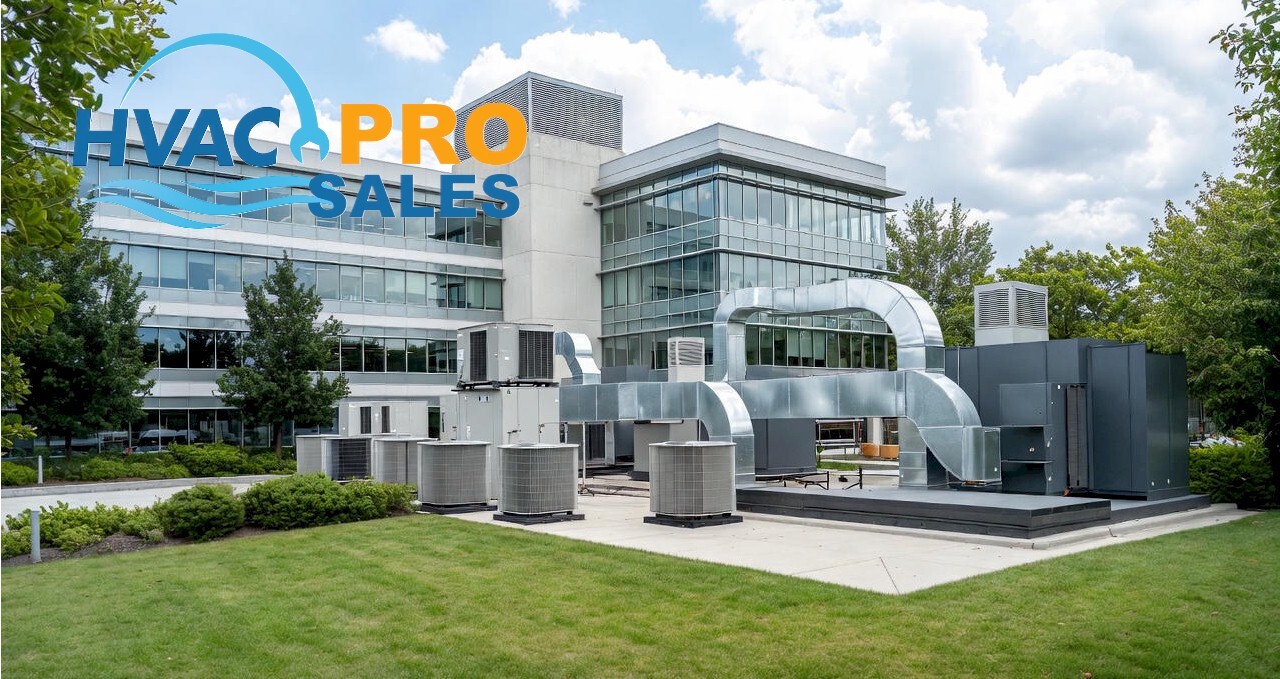
Commercial and specialty HVAC systems
Shop commercial and specialty HVAC systems including commercial split systems and chillers or VRF solutions. Compare capacity, electrical requirements, controls compatibility, and system type for professional installs.


