
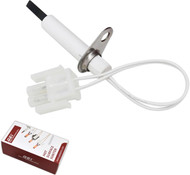
GEI Hot Surface Igniters: How to Identify the Correct Furnace Igniter Replacement
Published by HVACProSales Editorial Team on Jul 27th 2026
Learn how GEI hot surface igniters work, how silicon nitride and silicon carbide models differ, and what to verify before ordering a furnace igniter replacement.
A hot surface igniter is a critical component in the startup sequence of many gas-fired furnaces, boilers, rooftop units, unit heaters, water heaters, and other heating appliances. When the thermostat calls for heat, the furnace control system energizes the igniter so it can reach the temperature required to ignite the gas at the burner.
Shop the Current GEI Selection
GEI manufactures ignition components for HVAC, appliance, commercial, and industrial applications. The company has operated from the United States since 1997 and identifies its quality system as ISO 9001:2015 certified. Its ignition portfolio includes hot surface igniters, ignition modules, and spark transformers.
HVAC PRO Sales currently offers a focused GEI pilot selection that includes both silicon nitride and silicon carbide hot surface igniters. Because these components vary by voltage, connector, mounting configuration, dimensions, and equipment application, buyers should identify replacements carefully before ordering.
What Does a Hot Surface Igniter Do?
A hot surface igniter provides the heat required to ignite fuel during the furnace startup sequence.
- The thermostat calls for heat.
- The inducer motor starts.
- The pressure switch confirms proper draft.
- The control board energizes the igniter.
- The igniter heats to ignition temperature.
- The gas valve opens.
- The burners ignite.
- The flame sensor confirms flame.
- The circulating blower starts.
A failure anywhere in this sequence can prevent the furnace from operating. Therefore, a furnace that does not ignite does not automatically have a failed igniter. The control board, gas valve, pressure switch, flame sensor, wiring, power supply, burner condition, or safety circuit may also be involved.
Use the furnace not igniting diagnostic guide to review the ignition sequence and common checkpoints.
Silicon Nitride vs. Silicon Carbide Igniters
The current HVACProSales GEI selection includes both silicon nitride and silicon carbide igniters. These materials should not be treated as interchangeable solely because they serve the same general function.

Silicon Nitride Igniters
Silicon nitride igniters are widely used in modern ignition systems. GEI states that its silicon nitride ceramic cores are manufactured in-house and designed for demanding HVAC and appliance applications. Its published technical information highlights rapid heating, resistance to thermal cycling, high-temperature operation, and application across residential, commercial, food-service, and industrial equipment.

Silicon Carbide Igniters
Silicon carbide igniters are also found in many furnaces and heating appliances. Their physical shape, resistance characteristics, connector, bracket, and electrical requirements may differ from silicon nitride designs.
What matters most
- Original part number
- Equipment manufacturer
- Furnace or heater model
- Voltage
- Electrical characteristics
- Connector style
- Lead-wire configuration
- Mounting bracket
- Element position
- Overall dimensions
- Manufacturer documentation
How to Identify the Correct GEI Furnace Igniter
1. Find the original part number
Inspect the existing igniter for a printed, stamped, or labeled part number. Also review the furnace data plate, equipment parts list, service manual, wiring diagram, previous service records, and manufacturer parts breakdown.
Search by the original part number before searching only by appearance.
2. Record the furnace model and serial number
The equipment model and serial number help distinguish between revisions that may use different ignition components. Take a clear photograph of the full equipment label.
3. Confirm the operating voltage
Do not assume that all igniters use the same voltage. Verify the requirement from equipment documentation, control-board specifications, existing igniter markings, and manufacturer parts information.
4. Compare the electrical connector
Check connector shape, number of terminals, pin arrangement, locking tab, wire colors, lead-wire length, and harness configuration. A similar-looking igniter with the wrong connector may not be a correct replacement.
5. Compare the mounting bracket
Verify bracket shape, mounting-hole spacing, screw position, element orientation, insertion depth, and burner alignment. The igniter must be positioned correctly relative to the burner.
6. Compare dimensions
Measure the old igniter where possible, including overall length, element length, bracket-to-tip distance, ceramic-base dimensions, lead length, and mounting-hole spacing.
7. Confirm the cross-reference
Cross-reference information is useful, but it must be verified against the equipment manufacturer’s documentation. A cross-reference alone does not guarantee compatibility.
Igniter Identification Checklist
- Part number: Read all printed or labeled identifiers.
- Connector: Match the shape, pins, lock, and wire arrangement.
- Bracket: Compare mounting shape and hole spacing.
- Element: Verify material, form, position, and dimensions.
- Lead wires: Confirm length, routing, and harness configuration.
Shop GEI Hot Surface Igniters
Compare the live GEI pilot products below. Always verify the original part number, electrical specifications, connector, bracket, dimensions, and equipment documentation before ordering.
62-22868-82 Silicon Carbide Hot Surface Ignitor — GEI HSI-4008
SKU: 4008
Model / MPN: HSI-4008
Material: Silicon carbide
$27.99
View Product
0130F00008S Silicon Nitride Hot Surface Ignitor — GEI
SKU: HPS-HSI-1001
MPN: 0130F00008S
Material: Silicon nitride
$29.99
View Product
GEI 920520118 24V Silicon Nitride Igniter and Flame Rod Assembly
SKU: HPS-HSI-1002
MPN: 920520118
Material: Silicon nitride
$39.99
View ProductView the complete GEI igniter selection
Common Signs of a Possible Igniter Problem
Possible symptoms
- Furnace begins its startup sequence but does not ignite
- Igniter does not glow
- Igniter glows but the burners do not light
- Igniter element appears cracked, chipped, or broken
- Furnace repeatedly attempts ignition and locks out
- Control board displays an ignition-related fault
- Heat operation becomes intermittent
Other possible causes
- Failed control board
- Open pressure switch or restricted venting
- Gas-supply problem or defective gas valve
- Dirty or failed flame sensor
- Damaged wiring or improper voltage
- Burner contamination
- Tripped safety control
These symptoms do not prove that the igniter is defective.
Safety and Installation Notice
Gas-fired heating systems involve electricity, fuel gas, combustion, venting, flame-proving controls, and safety circuits. Diagnosis and installation should be performed by a qualified HVAC professional.
Before service:
- Disconnect electrical power and follow lockout procedures where applicable.
- Shut off the gas supply when required and allow hot components to cool.
- Follow the equipment manufacturer’s service instructions.
- Do not touch the igniter element with bare hands unless the manufacturer permits it.
- Confirm correct burner alignment after installation.
- Test the complete ignition sequence before returning equipment to service.
Do not bypass pressure switches, rollout switches, limit controls, flame sensors, or other safety devices.
GEI Igniter Applications
GEI identifies hot surface igniter applications across several markets, including residential gas furnaces, water heaters, boilers, pool heaters, commercial rooftop units, commercial boilers, unit heaters, make-up air equipment, food-service heating equipment, and industrial burners, ovens, kilns, and process heaters.
A product’s general application range does not confirm compatibility with a specific model. Always verify the individual part number.
Browse related Gas & Ignition Parts or review additional Technical Resources.
Why Buy GEI Igniters from HVAC PRO Sales?
HVAC PRO Sales supports contractors, facility-maintenance teams, property managers, procurement buyers, and homeowners searching for HVAC and furnace replacement parts.
- Part-number-focused product listings
- Detailed product images
- Compatibility reminders
- Cross-reference information where available
- Nationwide e-commerce ordering
- Product sourcing support
- One-year limited manufacturer-supported warranty, subject to applicable terms
Frequently Asked Questions
How do I find the correct furnace igniter?
Start with the original igniter part number and the furnace model and serial number. Then verify voltage, connector, bracket, dimensions, and manufacturer documentation.
Are silicon nitride and silicon carbide igniters interchangeable?
Not automatically. The material, resistance, voltage, connector, dimensions, mounting design, and control-system requirements must all be verified.
Can I select an igniter by appearance alone?
No. Different igniters can look similar but have different electrical and mounting requirements.
What information should I send for help identifying an igniter?
Send the equipment manufacturer, model number, serial number, existing igniter part number, clear equipment and component photos, connector and bracket photos, quantity, and delivery ZIP code.
Can a bad flame sensor look like an igniter problem?
Yes. A flame sensor, gas valve, pressure switch, control board, gas-supply issue, or wiring fault may produce similar symptoms.
Who should install a furnace igniter?
A qualified HVAC technician should diagnose and install gas-furnace ignition components.
What warranty applies to GEI igniters?
The current HVACProSales GEI products include a one-year limited manufacturer-supported warranty. Eligibility and remedy are subject to manufacturer review and the applicable warranty terms.
Need Help Identifying a GEI Igniter?
Send HVAC PRO Sales the furnace or heater model number, serial number, original igniter part number, clear equipment-label photos, connector details, quantity, and delivery ZIP code. We will review the information for product identification and sourcing assistance.
Shop GEI Hot Surface IgnitersRequest Igniter Sourcing Help