
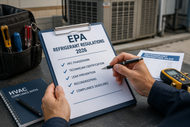
R-410A Phaseout Timeline: 2026 EPA Compliance Guide for HVAC
Published by HVACProSales Editorial Team on May 2nd 2026
R410A Phaseout Timeline Explained: 2026 HVAC Compliance Guide
TL;DR / Quick Summary: Under the EPA's American Innovation and Manufacturing (AIM) Act, the manufacturing and import of new HVAC systems utilizing R-410A refrigerant is officially banned as of January 1, 2025. However, the EPA has established a one-year "sell-through" period allowing the installation of existing R-410A split-system inventory through January 1, 2026. Beyond this date, all new residential installations must transition to next-generation A2L mildly flammable refrigerants, primarily R-454B and R-32.
---
Why is R-410A Being Phased Out?
For over two decades, R-410A (commonly known by brand names like Puron) has been the standard refrigerant used in residential air conditioners and heat pumps. While R-410A is safe for the ozone layer, it has an extremely high Global Warming Potential (GWP) of 2,088—meaning it is over two thousand times more potent than carbon dioxide at trapping heat in the atmosphere.
Under the AIM Act, the EPA is executing a phased phasedown of hydrofluorocarbons (HFCs) to reduce US GWP emissions by 85% by 2036. The transition away from R-410A to low-GWP alternatives is a critical milestone in this federal environmental roadmap.
---
The Critical EPA Transition Timeline
The transition is governed by strict regulatory deadlines that affect manufacturers, distributors, and HVAC contractors alike:
``` [ Jan 1, 2025: Manufacturing Ban ] ➔ [ Jan 1, 2026: Installation Deadline ] ➔ [ Post-2026: Service Only ] ```
- January 1, 2025 (Manufacturing & Import Ban): Manufacturers are no longer permitted to produce or import new residential air conditioning condensing units or heat pumps that utilize R-410A.
- January 1, 2026 (The Sell-Through Deadline): This is the most critical date for homeowners and contractors. All pre-existing inventory of R-410A split-system air conditioners and heat pumps must be fully installed and operational before January 1, 2026. Installing a new R-410A split system after this date is a violation of federal EPA guidelines.
- Post-January 1, 2026 (Service and Maintenance Only): R-410A refrigerant will remain available for servicing existing systems. The EPA is not requiring homeowners to replace operational R-410A systems. However, as HFC production quotas continue to decline, the cost of virgin R-410A refrigerant for repairs is expected to rise significantly.
---
What are A2L Refrigerants?
The replacement for R-410A is a new class of refrigerants designated as A2L (mildly flammable). Unlike highly flammable A3 refrigerants (like propane) or non-flammable A1 refrigerants (like R-410A), A2Ls are exceptionally difficult to ignite and have a very slow flame propagation speed.
The industry has settled on two primary A2L replacements:
| Global Warming Potential (GWP) | Primary HVAC Brands Utilizing It |
|---|---|
| 466 (78% reduction) | Carrier, Trane, Rheem, York |
| 675 (71% reduction) | Daikin, Fujitsu, MRCOOL |
---
Impact on Homeowners: What You Need to Know
If you are planning to purchase or replace an air conditioner or heat pump, the R-410A phaseout directly impacts your buying decision:
1. You Do Not Need to Replace Your Working AC: If your current R-410A system is running fine, you can continue to use it. Servicing and refilling your system with R-410A is fully legal and will remain so for the foreseeable future. 2. A2L Systems Require New Equipment: You cannot drop an A2L refrigerant (like R-454B or R-32) into an older R-410A system. Next-generation systems feature redesigned electrical components, spark-proof contactors, and integrated leak detection sensors designed specifically for A2L safety standards. 3. Expect Slight Price Adjustments: Because A2L systems require advanced safety sensors, specialized spark-free fan motors, and updated manufacturing lines, next-generation equipment carries a slight price premium (typically 5–10%) over legacy R-410A models.
---
Frequently Asked Questions (FAQs)
Will R-410A refrigerant become illegal to buy?
No. The EPA is phasing down the *production* of new HFCs, but buying, selling, and using reclaimed or existing stockpiles of R-410A to service older systems remains fully legal.
Can a technician charge my R-410A system with R-32 or R-454B?
Absolutely not. Mixing refrigerants is highly dangerous, illegal under EPA Section 608, and will destroy your system's compressor. A2L refrigerants must only be used in systems specifically engineered and certified for them.
What happens if I install an R-410A system after January 1, 2026?
Installing a new R-410A split system after the January 1, 2026 sell-through deadline violates EPA regulations. Distributors and contractors who facilitate illegal installations face substantial federal fines and civil penalties.
---
Related Refrigerant Resources
- SEER2 Efficiency Regulations Guide — Learn about the testing standards that accompany the refrigerant transition.
- HVAC Glossary & Technical Terms — Master the terminology used in modern system diagnostics.
- Ductless Mini Split Systems Catalog — Browse our inventory of next-generation, compliant heating and cooling systems.
---
Secure Your Compliant HVAC System Today
We are fully prepared for the transition, stocking both remaining R-410A clearance inventory and next-generation A2L-compliant systems:
- Shop Next-Gen Inverter Heat Pumps: Explore our fully compliant, low-GWP A2L Mini Split Catalog.
- Browse R-410A Clearance Systems: Take advantage of clearance pricing on remaining R-410A Split Systems (must be installed before Jan 1, 2026).
- Get Technical Transition Support: Confused about local building codes or EPA compliance requirements for your next project? Contact our engineering support desk at contact our team or call speak with an HVAC specialist for expert transition guidance.
? Complete Refrigerant Transition Resource
This article is part of our comprehensive A2L Refrigerant Transition Hub — your single source for EPA compliance timelines, R-454B and R-32 characteristics, safety protocols, and contractor field guides.