
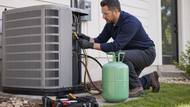
A2L Refrigerant Safety Requirements for HVAC Contractors
Published by HVACProSales Editorial Team on Jun 2nd 2026
As the HVAC industry transitions to low-Global Warming Potential (GWP) refrigerants, understanding the safety protocols for mild flammability is paramount. For HVAC contractors, compliance with A2L refrigerant safety requirements is no longer optional; it is a core operational necessity for 2026 and beyond.
Why A2L Refrigerants Require Specialized Handling
Unlike R-410A, which is classified as an A1 non-flammable refrigerant, A2L alternatives carry a Class 2L mild flammability rating. While they have a slow burning velocity and are highly difficult to ignite, safety standards dictate specific operational adjustments. The transition to A2Ls is designed to meet strict EPA regulations aimed at reducing environmental impact, but it introduces distinct handling requirements that every technician must master.
Critical A2L Tooling and Equipment Standards
To safely install and service A2L systems, technicians must utilize tools explicitly certified for use with mildly flammable gases. Standard HVAC tools can create electrical arcs (sparks) that present an ignition risk in the presence of a refrigerant leak. Key tooling upgrades include:
- Spark-Free Vacuum Pumps: Sealed switches and brushless motors prevent internal arcing.
- A2L-Compatible Recovery Machines: Must feature sealed relays and spark-free components.
- Left-Hand Thread Cylinders: A2L cylinders use left-hand threads (reverse thread) to prevent accidental connection to standard equipment.
- A2L-Rated Electronic Leak Detectors: Sniffers must be sensitive to R-454B and R-32 without utilizing open-arc sensors.
Comparison of A1 vs. A2L Safety Requirements
| Safety Parameter | A1 Refrigerants (R-410A) | A2L Refrigerants (R-454B / R-32) |
|---|---|---|
| Flammability Class | Class 1 (Non-Flammable) | Class 2L (Mildly Flammable) |
| Cylinder Threads | Right-Hand (Standard) | Left-Hand (Reverse) |
| Tool Certification | Standard HVAC Tools | Spark-Free / Intrinsically Safe |
| Active Ventilation | Recommended in confined spaces | Mandatory during all indoor charging/recovery |
Jobsite Safety and Active Ventilation Rules
When working on an R-454B or R-32 system, active workspace monitoring is required. Technicians should set up a portable electronic leak detector near the floor (as A2L gases are heavier than air) and establish active ventilation using a spark-free blower fan. No open flames, soldering, or brazing should occur while refrigerant lines are open or before a nitrogen purge is completed.
Commercial Reinforcement & Professional Support
Navigating the complex regulatory landscape of A2L systems requires professional planning and proper equipment. For high-quality, OEM-focused equipment and components designed for R-454B compliance, explore our commercial category selections or contact our team directly for expert guidance.
Need A2L Compliant HVAC Systems or Components?
Our technical team can help you select the correct equipment, tools, and accessories to meet 2026 EPA standards safely.
Contact Our Team Request a QuoteFrequently Asked Questions
Do I need a new vacuum pump for A2L systems?
Yes, you must use a vacuum pump certified as spark-free. Standard vacuum pumps have open-contact switches that can ignite mildly flammable A2L gases if a leak occurs near the pump.
Are A2L cylinders different colors?
Yes, A2L cylinders feature a red stripe or band around the shoulder to clearly signal flammability, and they utilize reverse (left-hand) threading on the valve connection.
Can I drop R-454B into an older R-410A system?
No. Retrofitting A1 systems with A2L refrigerants is strictly prohibited by the EPA. A2L systems require specific safety sensors, mitigation boards, and spark-free electrical components that older systems lack.
? Complete Refrigerant Transition Resource
This article is part of our comprehensive A2L Refrigerant Transition Hub — your single source for EPA compliance timelines, R-454B and R-32 characteristics, safety protocols, and contractor field guides.